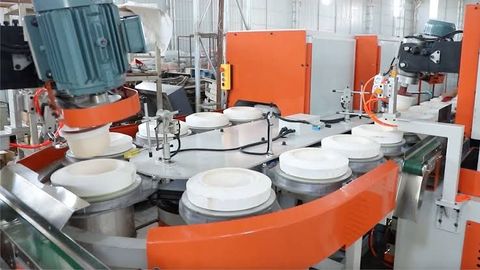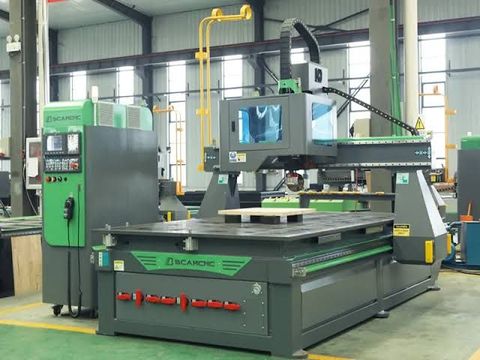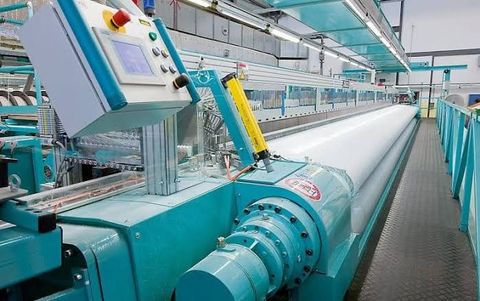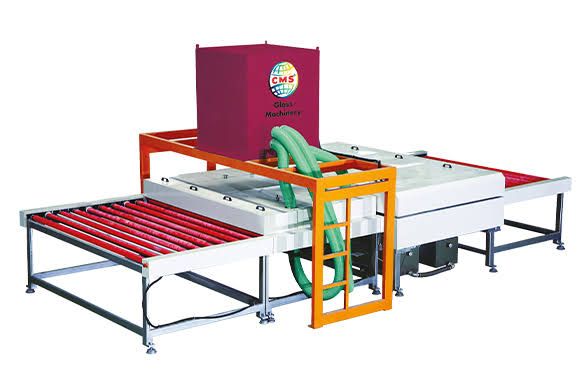
Insulating glass manufacturing equipment is used to produce insulating glass units (IGUs), commonly used in windows, doors.
An IGU typically consists of two or more glass panes separated by a spacer and sealed around the perimeter to create an insulating cavity.
Modern production lines can automate glass handling, washing, spacer application, assembly, pressing, gas filling, and sealing. Equipment selection depends on glass dimensions, thickness, unit configuration, production volume, spacer technology, sealing materials, automation requirements, and quality standards.
What Is Insulating Glass Manufacturing Equipment?
Insulating glass manufacturing equipment consists of specialized machines used to transform individual glass panes into sealed multi-pane insulating units.
A typical IGU includes:
- Two or more glass panes
- Spacer frame
- Primary seal
- Secondary seal
- Insulating cavity
- Desiccant
- Optional inert gas filling
The cavity between the glass panes can be filled with dry air or a suitable insulating gas such as argon.
The manufacturing line must maintain accurate glass positioning and a reliable perimeter seal to protect the cavity from moisture and maintain long-term performance.
How Is Insulating Glass Manufactured?
The production process generally involves several coordinated stages.
1. Glass Cutting
Glass sheets are cut to the required dimensions using an automated or semi-automated cutting system.
Depending on the production configuration, cutting equipment may include computerized optimization software to arrange different glass sizes efficiently.
2. Edge Processing
Selected applications require edge grinding, polishing, or other edge treatment before assembly.
Proper edge preparation can help improve handling and sealing consistency.
3. Glass Washing
The glass panes pass through an industrial washing and drying machine.
The washing stage removes:
- Dust
- Cutting residues
- Oil
- Fine particles
- Other surface contaminants
Clean glass surfaces are important for reliable sealing and visual quality.
4. Spacer Frame Preparation
The spacer separates the glass panes and defines the cavity width.
Spacer frames can be manufactured using different technologies, including rigid spacer bars and flexible spacer systems.
Desiccant is incorporated into the spacer system to absorb residual moisture within the cavity.
5. Spacer Application
The prepared spacer frame is positioned onto the glass pane with accurate alignment.
The frame dimensions must correspond closely with the intended IGU dimensions.
6. Glass Assembly
A second glass pane is positioned against the spacer frame.
Automated assembly equipment can maintain controlled alignment during this stage.
7. Pressing
The assembled unit passes through a pressing system that brings the glass panes and spacer frame into the appropriate configuration.
8. Gas Filling
For gas-filled IGUs, an inert gas can be introduced into the cavity.
Argon is widely used for suitable insulating glass applications.
9. Primary Sealing
A primary seal is applied around the spacer and glass interface.
The seal helps prevent moisture and gas movement through the edge system.
10. Secondary Sealing
A secondary seal is applied around the perimeter to provide additional structural and environmental protection.
11. Inspection and Curing
The finished unit is inspected for dimensions, alignment, visual defects, sealing quality, and other relevant characteristics.
The sealing material is then allowed to achieve its required condition according to the material and production process.
Types of Insulating Glass Manufacturing Equipment
Different machines are used at different stages of IGU production.
Glass Cutting Machines
Computer-controlled cutting machines accurately divide large glass sheets into specified dimensions.
They can incorporate optimization software for production planning and cutting layouts.
Glass Edge Processing Machines
Edge-processing equipment can grind, polish, or otherwise prepare glass edges for subsequent operations.
Glass Washing Machines
Automatic washing machines use brushes, water, and drying systems to prepare clean glass surfaces.
Spacer Bending Machines
Automatic spacer bending machines shape spacer bars according to programmed dimensions.
They can produce rectangular or other specified frame geometries.
Spacer Assembly Machines
These machines position or apply prepared spacers to glass panes.
IGU Assembly Machines
Assembly systems combine the glass panes and spacer frame into a controlled unit.
Automatic Pressing Machines
IGU presses apply controlled pressure to assemble the glass and spacer system.
Gas Filling Machines
Gas-filling systems introduce an insulating gas into the cavity between glass panes.
Automatic Sealing Machines
Automated sealant systems apply primary or secondary sealants along the IGU perimeter.
Complete IGU Production Lines
Integrated production lines can combine multiple stages into a coordinated manufacturing workflow.
Major Components of IGU Manufacturing Equipment
| Equipment Component | Primary Function |
|---|---|
| Glass Cutting System | Cuts glass to required dimensions |
| Loading Table | Positions glass sheets |
| Edge Processor | Prepares glass edges |
| Washing Unit | Cleans glass surfaces |
| Drying Unit | Removes water from glass |
| Spacer Bender | Forms spacer frames |
| Spacer Applicator | Positions spacer on glass |
| Assembly Station | Combines glass and spacer |
| Pressing Unit | Compresses assembled IGU |
| Gas Filling System | Introduces insulating gas |
| Sealant Applicator | Applies perimeter seal |
| Control System | Coordinates machine operations |
| Inspection System | Checks selected quality parameters |
The configuration varies according to the production line and IGU specification.
Spacer Technologies for Insulating Glass
The spacer is a critical component of an insulating glass unit.
Aluminum Spacers
Aluminum spacers are rigid and widely used in conventional IGU designs.
However, aluminum has relatively high thermal conductivity compared with some modern warm-edge spacer technologies.
Warm-Edge Spacers
Warm-edge spacer systems use materials or constructions designed to reduce thermal bridging around the glass perimeter.
They can be based on polymeric materials, stainless steel, or hybrid constructions.
Flexible Spacers
Flexible spacer systems can be formed directly around the glass perimeter using specialized application equipment.
The appropriate spacer depends on thermal requirements, structural design, sealant compatibility, production method, and applicable standards.
Insulating Glass Sealants
Sealants are essential to the performance of an IGU edge system.
Primary Seal
The primary seal creates a barrier between the spacer and glass and helps control moisture and gas transmission.
Secondary Seal
The secondary seal provides additional protection and structural integrity.
Common secondary-seal materials include suitable silicone, polysulfide, and polyurethane formulations.
Sealant selection should account for:
- Glass type
- Spacer system
- Gas filling
- Environmental exposure
- Temperature range
- Compatibility
- Curing characteristics
- Required service conditions
Automation in IGU Manufacturing Equipment
Modern insulating glass production lines can incorporate extensive automation.
Automation can control:
- Glass identification
- Glass positioning
- Washing
- Spacer bending
- Spacer placement
- Assembly
- Pressing
- Gas filling
- Sealant application
- Production data
CNC-Controlled Processing
Computerized systems can automatically manage glass dimensions and production parameters.
Automatic Glass Handling
Robotic or automated handling systems can transfer glass between processing stations while maintaining alignment.
Automated Gas Filling
Gas-filling systems can control cavity filling according to programmed process parameters.
Automated Sealing
Automatic sealant applicators can maintain consistent bead dimensions and application paths.
Quality Control in IGU Manufacturing
Quality control is important because the performance of an insulating glass unit depends on dimensional accuracy, clean surfaces, proper assembly, and edge-seal integrity.
Important inspection points include:
- Glass dimensions
- Glass thickness
- Spacer alignment
- Cavity width
- Surface cleanliness
- Sealant application
- Edge-seal continuity
- Gas filling
- Visual defects
- Unit squareness
- Glass positioning
Gas-Fill Verification
For gas-filled units, appropriate testing can verify that the cavity contains the required gas concentration.
Seal Inspection
The perimeter seal should be checked for discontinuities, voids, contamination, or other defects.
Applications of Insulating Glass Units
IGUs are used extensively in building-envelope applications.
Residential Windows
Insulating glass can be incorporated into windows and doors to improve thermal performance and reduce heat transfer.
Commercial Buildings
IGUs are commonly used in:
- Office buildings
- Retail buildings
- Hotels
- Institutional buildings
- High-rise structures
Curtain Walls
Large insulating glass units can be incorporated into curtain-wall systems where the glazing system is engineered for the building design.
Skylights
Appropriately designed IGUs can be used in skylights and overhead glazing applications.
Architectural Glazing
Insulating glass systems can combine thermal performance with various aesthetic and architectural requirements.
Factors Affecting IGU Performance
Cavity Width
The space between glass panes affects thermal and acoustic behavior.
Gas Type
The cavity can contain dry air or an insulating gas such as argon, depending on the unit design.
Glass Configuration
Performance depends on:
- Glass thickness
- Number of panes
- Coatings
- Low-emissivity surfaces
- Laminated or tempered configurations
Spacer Design
Spacer material and geometry influence edge thermal behavior.
Seal Quality
A properly designed and manufactured edge seal helps maintain cavity conditions over the expected service period.
Common IGU Manufacturing Problems
Glass Contamination
Dust, oil, or other contaminants can interfere with sealing and affect visual quality.
Spacer Misalignment
Incorrect spacer positioning can create uneven cavity widths or affect the appearance of the finished unit.
Incomplete Sealant Application
Gaps or inconsistent sealant application can compromise edge-seal performance.
Gas Loss
Inadequate sealing, damaged components, or production defects can lead to gas leakage.
Glass Breakage
Improper handling, excessive pressure, mechanical contact, or unsuitable process settings can damage glass.
Condensation Between Panes
Persistent moisture or condensation inside the cavity can indicate a problem with the insulating glass edge system.
Maintenance of IGU Manufacturing Equipment
Routine maintenance helps maintain production consistency.
Typical activities include:
- Cleaning washing brushes
- Inspecting glass-handling components
- Checking conveyor systems
- Inspecting spacer-bending tools
- Checking pressing mechanisms
- Maintaining gas-filling equipment
- Inspecting sealant pumps
- Cleaning sealant nozzles
- Checking sensors
- Inspecting electrical systems
- Verifying machine calibration
Maintenance schedules should follow equipment documentation and production conditions.
How to Select Insulating Glass Manufacturing Equipment
Equipment selection should begin with the intended IGU specifications and production requirements.
Consider:
- Maximum glass dimensions
- Minimum glass dimensions
- Glass thickness range
- Number of glass panes
- Spacer technology
- Production capacity
- Glass-washing requirements
- Spacer-bending technology
- Gas-filling requirements
- Sealant system
- Automation level
- Glass handling
- Quality-control systems
- Available factory space
- Maintenance requirements
For a complete production line, compatibility between individual machines is particularly important.
Manual, Semi-Automatic vs Automatic IGU Production
| Factor | Manual | Semi-Automatic | Automatic |
|---|---|---|---|
| Material Handling | High operator involvement | Partial automation | Extensive automation |
| Production Consistency | Operator dependent | Improved | High potential |
| Production Capacity | Generally lower | Moderate | Higher |
| Process Monitoring | Manual | Partial | Integrated |
| Labor Requirement | Higher | Moderate | Lower operator intervention |
| Process Integration | Limited | Moderate | High |
The appropriate configuration depends on production volume, product variety, factory layout, and automation requirements.
How to Evaluate IGU Manufacturing Equipment Manufacturers
When evaluating insulating glass manufacturing equipment manufacturers, consider their technical capabilities and complete-line integration.
Important factors include:
- Glass-size range
- Glass-thickness range
- Production capacity
- Washing technology
- Spacer systems
- Assembly technology
- Pressing system
- Gas filling
- Sealant application
- Glass handling
- Automation
- Quality-control systems
- Machine integration
- Technical documentation
- Maintenance requirements
The manufacturer should be able to match the equipment configuration with the intended IGU dimensions, glass specifications, spacer technology, production volume, and automation requirements.
Energy Efficiency in IGU Production
Energy consumption in an IGU production facility can come from glass handling, washing, compressed air, motors, sealant equipment, heating, drying, and other auxiliary systems.
Efficient drives, optimized production scheduling, appropriate machine settings, and preventive maintenance can help reduce unnecessary energy consumption.
The energy performance of the finished IGU itself depends on factors such as glass configuration, coatings, cavity conditions, spacer design, and edge-seal construction.
Frequently Asked Questions
What is insulating glass manufacturing equipment?
Insulating glass manufacturing equipment consists of machines used to cut, process, wash, assemble, press, gas-fill, and seal glass panes into insulating glass units.
What machines are required for IGU production?
A production line may include glass cutting equipment, edge-processing machines, glass washers, spacer-bending equipment, spacer applicators, assembly systems, presses, gas-filling systems, and automatic sealant applicators.
What is the purpose of the spacer in an IGU?
The spacer separates the glass panes and establishes the cavity width. It also commonly incorporates a desiccant system to help control moisture within the cavity.
Why is gas filling used in insulating glass?
Suitable insulating gases, such as argon, can replace air within the cavity and are used in certain IGU designs to improve thermal performance.
How do I select insulating glass manufacturing equipment?
Evaluate glass dimensions and thickness, IGU configuration, spacer technology, production volume, washing requirements, gas filling, sealing technology, automation, quality control, factory space, and maintenance requirements.
Conclusion
Insulating glass manufacturing equipment combines glass processing, washing, spacer preparation, assembly, pressing, gas filling, sealing, and inspection technologies to produce sealed multi-pane glass units. Each stage contributes to the dimensional accuracy, visual quality, and long-term performance of the finished IGU.
Modern production lines can incorporate computerized controls, automatic glass handling, spacer bending, gas filling, sealant application, and quality monitoring. The appropriate configuration depends on glass specifications, unit design, spacer technology, production capacity, and automation requirements.
When selecting insulating glass manufacturing equipment, manufacturers should evaluate the complete production workflow rather than individual machines alone. Compatibility between glass processing, spacer systems, assembly, pressing, gas filling, sealing, handling, and inspection equipment is important for creating a coordinated IGU production process.