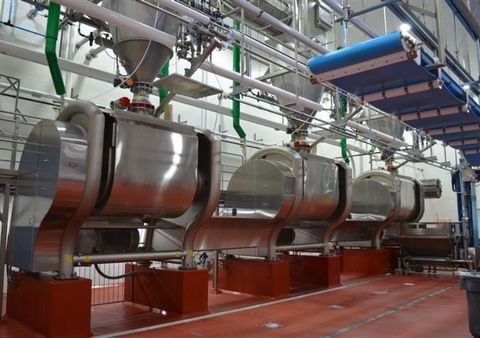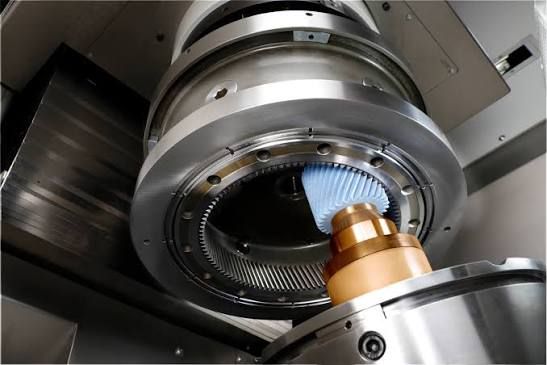
Gear honing equipment is used for precision finishing of gear teeth after earlier machining and, in many applications, after heat treatment.
The honing process can improve tooth surface characteristics, reduce irregularities, and help achieve the dimensional and functional requirements of finished gears.
Gear honing is widely associated with automotive transmissions, industrial gearboxes, power-transmission systems, and precision mechanical components. Modern CNC gear honing machines can provide controlled movement, repeatable processing, and automated inspection capabilities.
What Is Gear Honing?
Gear honing is a gear-finishing process in which a honing tool engages with the teeth of a gear while relative rotational and sliding movements occur between the tool and workpiece.
The controlled interaction removes a small amount of material or corrects surface irregularities, depending on the process and application.
Main Objectives of Gear Honing
Gear honing can be used to:
- Improve tooth surface finish
- Reduce machining irregularities
- Correct minor surface imperfections
- Improve gear engagement characteristics
- Reduce noise and vibration in suitable applications
- Support consistent tooth geometry
- Prepare gears for final inspection or assembly
The exact material-removal mechanism depends on the honing technology, tool design, gear material, and process parameters.
How Does Gear Honing Equipment Work?
A typical gear honing system uses a specialized honing tool that meshes with the gear being processed.
The tool and gear rotate at controlled speeds while the machine maintains a defined relationship between their axes. Additional controlled movements create the sliding action needed for the finishing process.
Basic Honing Sequence
- The gear is mounted and accurately aligned.
- The appropriate honing tool is installed.
- Machine parameters are configured.
- The honing tool engages with the gear teeth.
- Controlled rotational and sliding movements occur.
- A small amount of material is processed from the tooth surfaces.
- The gear is removed from the machine.
- Dimensional and surface inspections are performed.
CNC systems can control the movements and process parameters automatically.
Main Components of Gear Honing Equipment
Machine Base
The machine base provides structural support and helps maintain the rigidity required for precision finishing.
Workpiece Spindle
The workpiece spindle holds and rotates the gear. Accurate spindle performance is essential for maintaining the required tooth geometry.
Honing Spindle
The honing spindle rotates the honing tool and controls its relationship with the workpiece.
Honing Tool
The honing tool is the primary finishing component. Its tooth geometry, abrasive characteristics, dimensions, and condition influence the resulting gear surface.
Dressing System
Some honing systems incorporate dressing mechanisms to maintain the condition and geometry of the honing tool.
CNC Control
CNC controls coordinate spindle rotation, axis movement, feed rates, and other process parameters.
Coolant System
Cooling and lubrication can help control heat, remove particles, and maintain process stability.
Types of Gear Honing Equipment
Different machine configurations are designed for different gear geometries and production requirements.
CNC Gear Honing Machines
CNC gear honing machines use programmable controls to coordinate the honing process.
They can provide:
- Automated cycle control
- Repeatable positioning
- Controlled spindle speeds
- Programmable feeds
- Process monitoring
- Digital parameter storage
These features are particularly useful in precision and high-volume manufacturing environments.
Internal Gear Honing Machines
Internal gear honing equipment is designed to process gear teeth located inside a ring-shaped component.
The machine geometry and tooling must provide access to the internal tooth surface.
External Gear Honing Machines
External gear honing systems process teeth located on the outside diameter of a gear.
They are used for suitable spur and helical gear applications.
Helical Gear Honing Equipment
Helical gears require coordinated movement between the gear and honing tool because of their angled teeth.
Specialized CNC systems can synchronize the required rotational and axial movements.
Gear Honing vs. Gear Grinding
Both processes can be used for gear finishing, but their applications and material-removal characteristics differ.
| Feature | Gear Honing | Gear Grinding |
|---|---|---|
| Primary purpose | Fine gear finishing | Precision material removal and finishing |
| Typical material removal | Low | Can be higher |
| Surface improvement | Strong | Strong |
| Tool type | Honing tool | Grinding wheel |
| Heat-treated gears | Common application | Common application |
| Process characteristics | Controlled sliding contact | Abrasive grinding |
| Typical use | Finishing and correction | High-precision finishing |
The appropriate finishing process depends on gear material, required accuracy, surface specifications, production volume, and preceding machining operations.
Gear Honing Process Parameters
Several parameters influence the final result.
Honing Speed
Tool and workpiece speeds determine the relative motion between the mating surfaces. The appropriate speed depends on the machine, tool, gear material, and process requirements.
Feed Rate
Feed controls how quickly the tool moves relative to the workpiece. Excessive feed can affect surface quality and process stability.
Pressure
Controlled engagement pressure influences material removal and tool behavior.
Honing Angle
The relationship between the honing tool and gear can influence the resulting tooth surface pattern.
Tool Condition
A worn or incorrectly dressed honing tool can affect gear geometry and surface finish.
Coolant Conditions
Coolant flow, temperature, filtration, and composition can influence thermal stability and process cleanliness.
Applications of Gear Honing Equipment
Gear honing is used in several precision manufacturing sectors.
Automotive Gear Manufacturing
Transmission gears often require controlled tooth surfaces and consistent geometry. Gear honing can be incorporated into production processes for suitable automotive gear designs.
Industrial Gearboxes
Industrial reducers and gearboxes may use honed gears to improve tooth surface characteristics and operating behavior.
Power Transmission
Precision gears used in mechanical power-transmission systems can undergo honing as part of their finishing process.
Robotics
Robotic transmissions may require highly consistent gear geometry and surface characteristics because small variations can influence movement and noise.
Aerospace
Selected aerospace gear applications require tightly controlled manufacturing and inspection processes. Gear honing may be used where appropriate to the gear material and design.
Heavy Machinery
Gears used in construction, mining, and industrial equipment can undergo specialized finishing processes to meet required performance specifications.
Benefits of Gear Honing
Improved Surface Finish
Honing can reduce certain surface irregularities left by previous machining operations.
Controlled Gear Engagement
A properly processed tooth surface can support smoother interaction between mating gears.
Noise Reduction Potential
In appropriate gear designs, improved tooth surface characteristics can contribute to reduced operating noise and vibration.
Consistent Finishing
CNC-controlled honing equipment can provide repeatable processing conditions across production batches.
Suitable for Complex Gear Geometry
Specialized honing systems can process various external and internal gear configurations.
Gear Honing Tools
The honing tool is a critical part of the process.
Common considerations include:
- Tool material
- Abrasive characteristics
- Tooth geometry
- Tool diameter
- Helix configuration
- Tool hardness
- Dressing requirements
- Tool wear
The tool must be compatible with the gear geometry and material being processed.
Tool Dressing
Dressing restores or maintains the functional characteristics of certain honing tools.
The dressing frequency depends on tool material, workpiece material, production volume, process parameters, and the manufacturer's recommendations.
Quality Control After Gear Honing
Inspection is essential for confirming that the finished gear meets its design requirements.
Tooth Profile
The tooth profile should be measured against the specified geometry.
Tooth Lead
Lead inspection verifies the tooth's alignment along its face width.
Pitch
Pitch measurements help verify the spacing and positional relationship between teeth.
Runout
Runout inspection identifies deviations in gear rotation relative to its reference axis.
Surface Roughness
Surface measurement determines whether the honed tooth surface meets the specified roughness range.
Hardness
Where required, hardness testing can confirm that the gear retained the intended properties following heat treatment and finishing.
Automation in Gear Honing
Modern gear honing equipment can incorporate automated features to improve production consistency.
Potential capabilities include:
- Automatic loading and unloading
- CNC tool positioning
- Automated dressing
- In-process measurement
- Tool-life monitoring
- Digital process records
- Automatic parameter adjustment
- Production data collection
Automation requirements should be matched to production volume and process complexity.
Maintenance of Gear Honing Equipment
Regular maintenance helps preserve machine accuracy and process stability.
Important maintenance areas include:
- Spindle inspection
- Guideway maintenance
- Lubrication
- Coolant filtration
- Tool inspection
- Dressing-system maintenance
- CNC system checks
- Fixture inspection
- Sensor verification
- Machine alignment
Coolant contamination and tool wear should be monitored because they can influence both machine performance and finished gear quality.
How to Select Gear Honing Equipment
Selecting suitable equipment requires a detailed assessment of the gear and production process.
Identify Gear Geometry
Determine whether the machine needs to process spur, helical, internal, external, or other specialized gear configurations.
Consider Gear Dimensions
Evaluate gear diameter, face width, bore dimensions, tooth count, and overall workpiece size.
Review Accuracy Requirements
Define the required tooth profile, lead, pitch, runout, and surface-finish specifications.
Evaluate Production Volume
High-volume manufacturing may benefit from automated loading, tool management, dressing, and inspection.
Examine CNC Capabilities
Review axis configuration, synchronization capabilities, programming functions, process monitoring, and data management.
Assess Tool Compatibility
Confirm that the machine supports the required honing tools and dressing methods.
Consider Coolant and Filtration
A suitable coolant-management system is important for maintaining process cleanliness and thermal stability.
Review Manufacturer Capabilities
When evaluating gear honing equipment manufacturers, consider machine specifications, tooling compatibility, automation options, inspection integration, technical documentation, maintenance requirements, and long-term technical support.
Frequently Asked Questions
What is gear honing equipment?
Gear honing equipment is specialized machinery used to finish gear teeth through controlled rotational and sliding contact between a gear and a honing tool.
What is gear honing used for?
Gear honing can improve tooth surface characteristics, reduce certain machining irregularities, and support consistent gear performance in suitable applications.
Is gear honing suitable for heat-treated gears?
Yes. Gear honing is commonly incorporated into finishing processes for suitable heat-treated gears, depending on the gear material, hardness, geometry, and required finish.
What is the difference between gear honing and gear grinding?
Gear honing uses controlled meshing and sliding contact with a honing tool, while gear grinding uses an abrasive grinding wheel. The appropriate process depends on the required accuracy, surface finish, material, and manufacturing sequence.
How should gear honing equipment be selected?
Consider gear geometry, dimensions, material, accuracy requirements, surface-finish specifications, production volume, CNC capabilities, tooling, automation, inspection requirements, and machine maintenance.
Conclusion
Gear honing equipment plays an important role in precision gear finishing. By using controlled interaction between a honing tool and gear teeth, the process can improve surface characteristics and support consistent tooth geometry for suitable applications.
CNC control, automated dressing, process monitoring, and in-process inspection have expanded the capabilities of modern gear honing machinery. Selecting the appropriate system requires careful consideration of gear geometry, dimensions, material, accuracy, surface requirements, production volume, tooling, and automation needs.