Industrial washing machines are specialized cleaning systems designed to remove dirt, dust, oils, residues, contaminants, and other unwanted materials from products.
They are used across manufacturing, food processing, automotive, pharmaceutical, hospitality, and industrial laundry operations.
Unlike household washing equipment, industrial systems are designed for higher throughput, repeated operation, specialized cleaning requirements, and integration with production lines. Machine selection depends on the material being cleaned, contamination type, required cleaning level, throughput, washing method, water requirements, and available automation.
What Are Industrial Washing Machines?
An industrial washing machine is a mechanical cleaning system designed to process large quantities of materials or components under controlled conditions.
Depending on the application, the machine can use:
- Water
- Detergents
- High-pressure sprays
- Rotating brushes
- Immersion
- Ultrasonic energy
- Steam
- Air drying
- Heated cleaning solutions
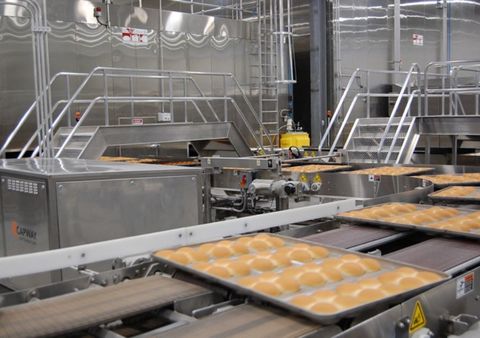
Industrial washing systems can be configured for batch processing, continuous processing, or automated production-line operation.
How Do Industrial Washing Machines Work?
The exact cleaning sequence depends on the machine type and material being processed.
1. Loading
Products, components, textiles, or food materials are placed into the washing chamber, basket, conveyor, drum, or loading system.
2. Pre-Cleaning
Loose dirt, dust, particles, or other surface contamination may be removed through air, water, brushing, or preliminary spraying.
3. Washing
The main cleaning stage uses water, detergent, mechanical action, heat, or a combination of these methods.
4. Rinsing
A clean-water stage removes remaining detergent, loosened contamination, and cleaning residues.
5. Drying
Depending on the application, drying can be performed using:
- Heated air
- High-velocity air
- Centrifugal action
- Vacuum
- Compressed air
6. Unloading
Cleaned materials are discharged manually or transferred automatically to the next processing stage.
Types of Industrial Washing Machines
Different washing technologies are designed for different applications.
Industrial Parts Washing Machines
Parts washers clean metal, plastic, and other industrial components before assembly, coating, machining, inspection, or maintenance.
They can use spray, immersion, agitation, brushing, or combinations of cleaning methods.
Industrial Vegetable Washing Machines
Vegetable washing systems remove soil, debris, and surface contamination from products such as potatoes, carrots, leafy vegetables, and other produce.
They can incorporate water sprays, rotating drums, brushes, conveyors, and controlled water flow.
Industrial Fruit Washing Machines
Fruit washers are designed to clean fruits before sorting, cutting, processing, juicing, or packaging.
Gentle handling is important because excessive mechanical force can damage delicate produce.
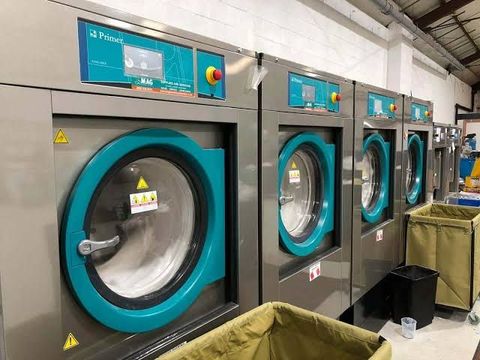
Industrial Laundry Machines
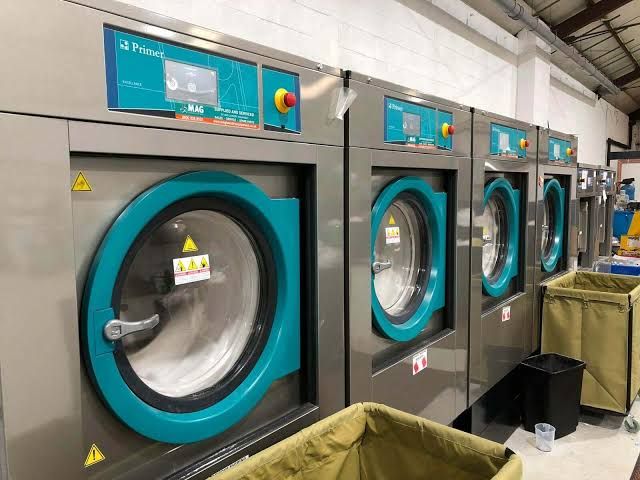
Industrial laundry systems process large quantities of textiles used by hotels, hospitals, food facilities, commercial organizations, and other institutions.
They may include washing extractors, tunnel washers, dryers, and automated textile-handling equipment.
Spray Washing Machines
Spray washers use pressurized cleaning liquid directed through strategically positioned nozzles.
They are commonly used for industrial components and manufactured parts.
Ultrasonic Washing Machines
Ultrasonic washers use high-frequency sound waves to create microscopic bubbles in a cleaning liquid. Their implosion generates localized cleaning action that can reach small surfaces and complex geometries.
Rotary Drum Washing Machines
Rotary drum systems use a rotating chamber to move and clean products continuously or in batches.
They are commonly used for produce, bulk components, and other materials capable of withstanding controlled mechanical movement.
Key Components of Industrial Washing Machines
| Component | Primary Function |
|---|---|
| Washing Chamber | Contains the cleaning process |
| Pump | Circulates cleaning liquid |
| Spray Nozzles | Direct cleaning solution |
| Conveyor | Moves products through the machine |
| Rotating Drum | Provides product movement |
| Heating System | Raises cleaning-liquid temperature |
| Filters | Remove particles from cleaning liquid |
| Water Tank | Stores process water |
| Drying System | Removes moisture |
| Control Panel | Manages machine operation |
| Sensors | Monitor process conditions |
The component configuration varies according to the cleaning method and application.
Cleaning Methods Used in Industrial Washing
High-Pressure Cleaning
Pressurized water or cleaning solution removes contamination through mechanical force.
This method can be effective for robust components and heavily contaminated surfaces.
Immersion Cleaning
Products are submerged in a cleaning solution for a defined period. Agitation or circulation can improve cleaning effectiveness.
Spray Cleaning
Multiple nozzles direct cleaning liquid toward the product surface. Nozzle placement and pressure influence coverage.
Brush Cleaning
Rotating brushes provide mechanical action against the product surface. This approach is often used for fruits and vegetables.
Ultrasonic Cleaning
Ultrasonic energy creates cavitation in a liquid medium, helping remove contaminants from complex or difficult-to-reach surfaces.
Steam Cleaning
Steam can provide thermal cleaning action for suitable industrial applications. Equipment and materials must be compatible with the operating temperature.
Applications of Industrial Washing Machines
Industrial washing systems are used across numerous sectors.
Food Processing
Food-processing facilities use washing equipment for:
- Fruits
- Vegetables
- Tubers
- Containers
- Food-processing equipment
- Production utensils
Washing systems can be integrated before cutting, peeling, cooking, freezing, or packaging.
Automotive Manufacturing
Parts washers clean components such as:
- Engine components
- Transmission parts
- Machined parts
- Metal housings
- Fasteners
- Mechanical assemblies
Cleaning may be required before coating, assembly, inspection, or further machining.
Pharmaceutical Manufacturing
Specialized washing systems can clean containers, production components, equipment parts, and other suitable items.
Cleaning processes must be designed around applicable contamination-control and validation requirements.
Industrial Laundry
Large-scale laundry systems process uniforms, linens, towels, workwear, and other textiles.
Metalworking
Industrial parts washers can remove:
- Cutting fluids
- Metal chips
- Grease
- Oils
- Dust
- Processing residues
Clean components can then proceed to inspection, coating, assembly, or additional processing.
Industrial Washing Machine Specifications
Several specifications should be considered during equipment selection.
Processing Capacity
Capacity may be expressed as:
- Kilograms per hour
- Pieces per hour
- Batches per cycle
- Liters per cycle
- Conveyor throughput
The appropriate measurement depends on the application.
Washing Pressure
Spray-based systems may specify pump pressure and flow rate. These parameters influence cleaning intensity.
Water Temperature
Heated washing can improve the removal of certain oils, fats, and residues. The appropriate temperature depends on the material and contamination.
Conveyor Speed
Continuous washing systems use conveyor speed to control product residence time.
Tank Capacity
Tank size affects cleaning-liquid volume, circulation, filtration, and operating duration.
Water and Energy Efficiency
Industrial washing systems can consume significant quantities of water and energy, making resource management an important design consideration.
Efficiency can be improved through:
- Controlled spray nozzles
- Water filtration
- Water recirculation
- Automatic flow control
- Heat recovery
- Insulated tanks
- Efficient pumps
- Variable-speed drives
- Optimized washing cycles
Water recirculation can reduce fresh-water demand where process hygiene and contamination requirements permit it.
Automation in Industrial Washing Machines
Modern washing systems can incorporate automated controls and sensors.
Automation can manage:
- Washing time
- Water flow
- Pump pressure
- Temperature
- Conveyor speed
- Detergent dosing
- Rinsing
- Drying
- Water-level control
- Alarm conditions
PLC-Based Controls
A programmable logic controller can coordinate pumps, valves, heaters, conveyors, sensors, and drying systems.
Recipe Management
Advanced systems can store cleaning programs for different products or components.
A recipe may specify:
- Washing duration
- Temperature
- Spray pressure
- Conveyor speed
- Detergent concentration
- Rinse time
- Drying time
Hygiene and Sanitation
Hygienic design is particularly important for food, pharmaceutical, and other contamination-sensitive applications.
Important design considerations include:
- Stainless-steel construction
- Smooth surfaces
- Accessible cleaning areas
- Proper drainage
- Reduced residue-collection points
- Appropriate seals
- Washable components
- Controlled water flow
Cleaning procedures should follow equipment documentation and the facility's sanitation program.
Quality Control in Industrial Washing
Cleaning effectiveness should be evaluated according to the application.
Visual Inspection
Surfaces can be inspected for remaining dirt, grease, residues, or foreign material.
Cleanliness Testing
Industrial component cleaning may use methods such as:
- Particle analysis
- Surface residue testing
- Oil contamination testing
- Water-break testing
- Chemical residue testing
Food-Processing Inspection
Produce washing operations may monitor surface cleanliness, product damage, water quality, and process conditions.
Process Monitoring
Temperature, pressure, flow, detergent concentration, and cycle time can be monitored to maintain repeatable cleaning conditions.
Common Industrial Washing Problems
Incomplete Cleaning
Insufficient pressure, incorrect detergent concentration, short washing time, or inadequate coverage can result in remaining contamination.
Product Damage
Excessive water pressure, mechanical action, temperature, or handling can damage delicate products.
Water Contamination
Reused process water can accumulate soil, oils, organic material, or other contaminants. Appropriate filtration and water-management procedures are therefore important.
Uneven Washing
Poor nozzle positioning, incorrect conveyor loading, or inadequate product rotation can create areas with insufficient cleaning.
Excessive Water Consumption
High flow rates, leaks, inefficient nozzles, or unnecessary continuous water use can increase water demand.
Maintenance of Industrial Washing Machines
Routine maintenance helps maintain cleaning performance and equipment reliability.
Important activities include:
- Cleaning washing chambers
- Inspecting spray nozzles
- Checking pumps
- Cleaning filters
- Inspecting conveyors
- Checking bearings
- Inspecting heating elements
- Checking water-level sensors
- Cleaning tanks
- Inspecting valves
- Checking electrical connections
- Testing safety controls
Filters, nozzles, and other components should be inspected regularly because accumulated contamination can reduce system performance.
How to Select Industrial Washing Machines
Selection should begin with the cleaning requirement and material characteristics.
Consider:
- Material or product type
- Contamination type
- Required cleanliness level
- Processing capacity
- Washing method
- Water temperature
- Pressure requirements
- Detergent compatibility
- Drying requirements
- Water availability
- Energy requirements
- Automation level
- Hygiene requirements
- Available floor space
- Integration with other equipment
Testing representative products or components can help establish appropriate washing parameters.
Industrial Washing Machines vs Manual Cleaning
| Factor | Industrial Washing Machines | Manual Cleaning |
|---|---|---|
| Throughput | High | Generally lower |
| Process Control | Automated options available | Operator-dependent |
| Cleaning Consistency | Repeatable when properly configured | Can vary |
| Water Management | Programmable systems available | More variable |
| Production Integration | Strong | Limited |
| Labor Intensity | Lower direct handling | Higher manual involvement |
| Monitoring | Sensors and controls available | Primarily manual |
The appropriate approach depends on production volume, cleaning requirements, product characteristics, and facility conditions.
How to Evaluate Industrial Washing Machine Manufacturers
When evaluating manufacturers, consider both cleaning technology and application expertise.
Important factors include:
- Washing technology
- Capacity range
- Pump and spray design
- Temperature-control systems
- Filtration
- Water-management capabilities
- Drying technology
- Automation
- Hygienic construction
- Safety systems
- Testing procedures
- Maintenance requirements
- Production-line integration
A manufacturer should be able to explain how the machine will achieve the required cleanliness level while accommodating the material, contamination type, throughput, and facility conditions.
Frequently Asked Questions
What are industrial washing machines used for?
Industrial washing machines clean products, components, textiles, fruits, vegetables, containers, and equipment using controlled water, detergents, mechanical action, heat, ultrasonic energy, steam, or combinations of these methods.
What types of industrial washing machines are available?
Common types include parts washers, vegetable washers, fruit washers, industrial laundry machines, spray washers, ultrasonic washers, and rotary drum washing systems.
Can industrial washing machines use recycled water?
Some systems can incorporate water filtration and recirculation. Whether recirculation is appropriate depends on the material, contamination level, hygiene requirements, and process specifications.
What factors affect industrial washing performance?
Important factors include water pressure, temperature, flow rate, detergent concentration, washing time, mechanical action, nozzle coverage, product loading, and contamination characteristics.
How do I select an industrial washing machine?
Evaluate the material being cleaned, contamination type, required cleanliness, throughput, washing method, temperature, pressure, drying requirements, water usage, automation, hygiene requirements, and production-line integration.
Conclusion
Industrial washing machines provide controlled cleaning solutions for food products, manufactured components, textiles, equipment, and other industrial materials. Spray, immersion, abrasive, ultrasonic, steam, and rotary washing technologies can be selected according to product characteristics and contamination requirements.
Cleaning performance depends on pressure, temperature, chemical concentration, mechanical action, residence time, water quality, and equipment configuration. Proper machine sizing and process control are important for achieving consistent results while protecting the material being cleaned.
Modern systems increasingly integrate PLC controls, sensors, automated dosing, variable-speed drives, filtration, water recirculation, and drying systems. With appropriate hygiene design and maintenance, industrial washing equipment can be integrated effectively into automated manufacturing and food-processing lines.