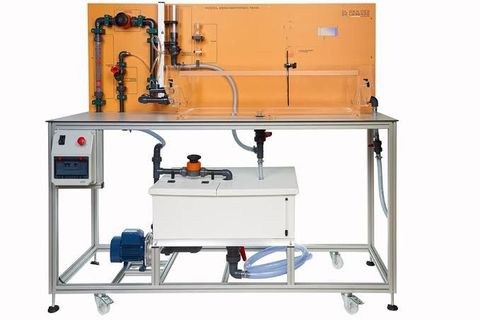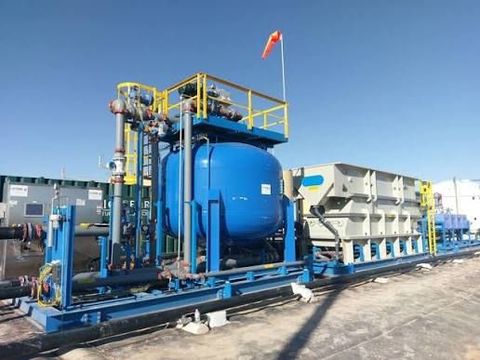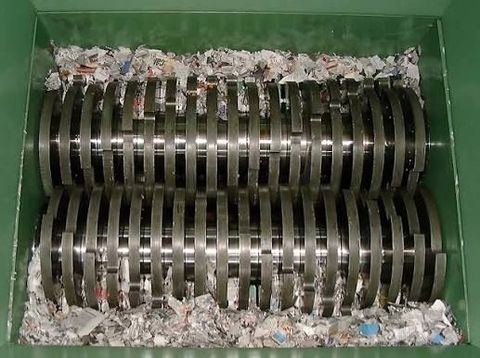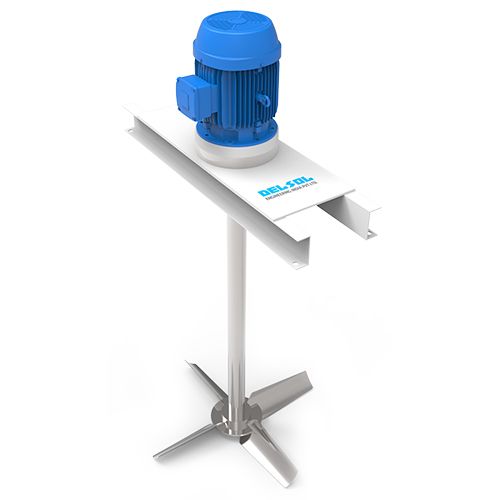
Industrial agitators are mechanical mixing devices used to circulate, blend, suspend, disperse, or maintain uniform conditions within tanks and process vessels.
They are widely used in chemical processing, pharmaceuticals, food and beverage production, wastewater treatment, cosmetics, paints, coatings, and other industrial applications.
An agitator typically consists of a motor, drive system, shaft, and impeller or mixing element. The correct configuration depends on liquid viscosity, tank geometry, solids concentration, required flow pattern, processing temperature, and the desired mixing result.
What Are Industrial Agitators?
Industrial agitators are mechanical devices designed to create controlled movement within a liquid or multiphase material.
Their primary functions can include:
- Blending liquids
- Suspending solid particles
- Dispersing materials
- Promoting heat transfer
- Improving mass transfer
- Maintaining uniform concentration
- Preventing sedimentation
- Supporting chemical reactions
- Maintaining product consistency
Agitators are commonly installed inside tanks, reactors, vessels, and other processing equipment.
How Do Industrial Agitators Work?
Industrial agitators transfer mechanical energy from a motor into the process material.
1. Motor Operation
An electric motor generates rotational power.
2. Speed and Torque Adjustment
A gearbox or direct-drive arrangement transfers the required speed and torque to the shaft.
3. Shaft Rotation
The shaft rotates the impeller inside the vessel.
4. Fluid Movement
The impeller creates a defined flow pattern within the tank.
Depending on the impeller design, flow can be primarily:
- Axial
- Radial
- Tangential
5. Mixing and Circulation
The resulting movement distributes materials and helps maintain the required process conditions.
Types of Industrial Agitators
Different agitator configurations are designed for different process requirements.
Top-Entry Agitators
Top-entry agitators are mounted above the vessel, with the shaft extending vertically into the process tank.
They are widely used because they can accommodate a broad range of vessel sizes and mixing applications.
Typical uses include:
- Chemical processing
- Water treatment
- Food processing
- Pharmaceutical production
- Industrial formulations
Side-Entry Agitators
Side-entry agitators are mounted through the side wall of a tank.
They are frequently used in large storage or process vessels where continuous circulation is required.
Bottom-Entry Agitators
Bottom-entry agitators are installed at the lower portion of the vessel.
They can be useful when specific circulation patterns or space constraints make top-entry installation unsuitable.
High-Shear Agitators
High-shear agitators generate intense local turbulence and shear.
They can be used for:
- Emulsification
- Dispersion
- Powder wetting
- Particle deagglomeration
- High-intensity mixing
Magnetic Agitators
Magnetically coupled agitators transfer rotational motion without a conventional shaft penetration into the process chamber.
They can be useful in applications where containment and reduced leakage potential are important.
Anchor Agitators
Anchor agitators use a large mixing element positioned close to the vessel wall.
They are particularly suitable for higher-viscosity materials and can help improve wall-to-fluid heat transfer.
Helical Agitators
Helical agitators use spiral-shaped mixing elements to move viscous materials through the vessel.
They are suitable for applications requiring strong axial circulation.
Industrial Agitator Impeller Types
The impeller is one of the most important parts of an agitator system.
Propeller Impellers
Propeller-type impellers generally generate strong axial flow and are commonly used for relatively low-viscosity liquids.
Turbine Impellers
Turbines can generate radial or axial flow depending on their geometry.
They are widely used in blending, dispersion, and gas-liquid processing.
Paddle Impellers
Paddle designs provide relatively broad fluid movement and can be used for low- to moderate-viscosity applications.
Hydrofoil Impellers
Hydrofoil impellers are designed to generate efficient axial pumping with relatively low turbulence.
They can be useful when bulk circulation is important.
Anchor Impellers
Anchor designs follow the vessel wall and are commonly used for viscous materials.
Key Components of Industrial Agitators
| Component | Main Function |
|---|---|
| Motor | Generates rotational power |
| Gearbox | Adjusts speed and torque |
| Shaft | Transfers rotational movement |
| Impeller | Creates fluid movement |
| Mechanical Seal | Helps contain process material |
| Bearings | Support rotating components |
| Coupling | Connects drive components |
| Mounting Assembly | Secures agitator to vessel |
| Variable-Frequency Drive | Controls motor speed |
| Control System | Manages operating parameters |
The component arrangement varies according to agitator type and application.
Flow Patterns in Agitation
Agitator geometry determines how material moves inside a vessel.
Axial Flow
Axial-flow impellers move material primarily parallel to the shaft.
They are useful for bulk circulation, blending, and solids suspension.
Radial Flow
Radial-flow impellers direct material outward from the shaft.
They can generate strong turbulence and are used in selected gas dispersion and mixing applications.
Tangential Flow
Tangential movement occurs around the vessel circumference.
Uncontrolled tangential flow can cause vortex formation, so baffles may be installed when appropriate.
Baffles in Agitated Tanks
Baffles are stationary vertical plates installed inside many mixing vessels.
Their functions can include:
- Reducing vortex formation
- Increasing turbulence
- Improving circulation
- Enhancing mixing efficiency
- Preventing excessive rotational movement
Baffle configuration should be matched to the vessel and impeller design.
Applications of Industrial Agitators
Industrial agitators are used across many industries.
Chemical Processing
Agitators can support:
- Chemical blending
- Reaction processes
- Suspension
- Dissolution
- Heat transfer
- Chemical formulation
Material compatibility is important because process chemicals can affect shafts, impellers, seals, and vessel components.
Pharmaceutical Manufacturing
Agitators can be used for suitable:
- Liquid formulations
- Suspensions
- Solutions
- Emulsions
- Intermediate processing
Pharmaceutical applications may require hygienic construction, controlled mixing, and appropriate cleaning procedures.
Food and Beverage Processing
Agitators are used for:
- Sauces
- Syrups
- Dairy formulations
- Beverages
- Liquid ingredients
- Food emulsions
Hygienic design and cleanable product-contact surfaces are important.
Cosmetics
Agitators can process:
- Creams
- Lotions
- Gels
- Shampoos
- Cosmetic liquids
- Personal-care formulations
High-viscosity products may require anchor or helical mixing elements.
Paints and Coatings
Agitators help blend pigments, binders, solvents, and additives.
High-shear configurations may be selected when strong dispersion is required.
Water and Wastewater Treatment
Agitators can maintain chemical solutions and suspended solids in treatment tanks.
They may support processes such as chemical dosing, flocculation, equalization, and sludge handling.
Industrial Agitator Specifications
Several technical parameters influence agitator selection.
Motor Power
Motor power determines the available mechanical energy.
The required power depends on liquid viscosity, density, impeller design, tank geometry, and desired mixing intensity.
Rotational Speed
Agitator speed is commonly expressed in revolutions per minute.
Low-speed systems are often used for gentle bulk circulation, while higher-speed systems can generate greater turbulence and shear.
Impeller Diameter
Impeller diameter influences pumping capacity, shear, power consumption, and circulation patterns.
Shaft Length
Shaft dimensions depend on vessel depth and agitator mounting configuration.
Long shafts may require additional mechanical considerations to maintain stability.
Viscosity
Liquid viscosity is a major selection factor.
Low-viscosity fluids can often be mixed with relatively high-speed impellers, while viscous materials may require larger, slower, high-torque mixing elements.
Mixing Performance Factors
Agitation performance depends on multiple variables.
Important factors include:
- Liquid viscosity
- Fluid density
- Impeller diameter
- Impeller speed
- Tank diameter
- Liquid depth
- Baffle configuration
- Solids concentration
- Particle size
- Temperature
- Gas flow
- Desired mixing time
The relationship between these factors should be considered when designing an agitation system.
Industrial Agitators for High-Viscosity Materials
High-viscosity products resist fluid movement and require greater torque.
Common agitator configurations for these applications include:
- Anchor agitators
- Helical agitators
- Gate agitators
- Paddle systems
- Planetary mixing systems
Scraper elements can also be incorporated in selected systems to improve wall-side material movement and heat transfer.
Automation in Industrial Agitators
Modern agitator systems can integrate automated controls.
Automation can regulate:
- Motor speed
- Mixing time
- Temperature
- Liquid level
- Feed rate
- Torque
- Pressure
- Recipe parameters
Variable-Frequency Drives
A variable-frequency drive allows the motor speed to be adjusted according to process requirements.
Different mixing stages can therefore use different rotational speeds.
PLC-Based Control
A programmable logic controller can coordinate the agitator with pumps, valves, sensors, heating systems, cooling systems, and other equipment.
Process Monitoring
Sensors can monitor:
- Temperature
- Level
- Pressure
- Motor load
- Speed
- Torque
This information can support process control and troubleshooting.
Temperature Control During Agitation
Agitation can improve heat distribution throughout a vessel.
A tank may use:
- Heating jackets
- Cooling jackets
- Internal coils
- External heat exchangers
Mixing helps reduce temperature gradients by circulating the process material.
This is particularly important during chemical reactions, dissolution, crystallization, and temperature-sensitive processing.
Hygienic Design
Food, pharmaceutical, cosmetic, and biotechnology applications may require specialized hygienic agitator designs.
Important considerations include:
- Smooth product-contact surfaces
- Appropriate stainless-steel grades
- Hygienic seals
- Minimized dead zones
- Drainable vessel geometry
- Clean-in-place compatibility
- Accessible components
Cleaning requirements should be considered during agitator and vessel design.
Common Industrial Agitator Problems
Poor Mixing
Poor mixing may result from an unsuitable impeller, incorrect speed, inadequate power, poor baffle configuration, or inappropriate vessel geometry.
Vortex Formation
Excessive tangential flow can create a vortex that reduces effective bulk circulation and may introduce air.
Appropriate baffles and impeller selection can help manage this condition.
Excessive Foaming
Some formulations can generate foam when exposed to high turbulence or air incorporation.
Operating speed and impeller selection should be evaluated according to product characteristics.
Shaft Vibration
Vibration may be associated with shaft imbalance, bearing wear, misalignment, or inappropriate operating conditions.
Seal Leakage
Mechanical seals can deteriorate because of pressure, temperature, chemical exposure, or mechanical wear.
Maintenance of Industrial Agitators
Routine maintenance helps maintain safe and reliable operation.
Typical activities include:
- Inspecting the motor
- Checking gearbox lubrication
- Inspecting bearings
- Checking shaft alignment
- Examining impellers
- Inspecting mechanical seals
- Checking couplings
- Monitoring vibration
- Inspecting mounting components
- Checking electrical connections
- Testing control systems
Maintenance intervals should follow equipment documentation and operating conditions.
How to Select Industrial Agitators
Selection should begin with the required mixing result and material characteristics.
Consider:
- Liquid viscosity
- Density
- Solids concentration
- Particle size
- Tank volume
- Tank geometry
- Required mixing time
- Required flow pattern
- Desired shear level
- Impeller diameter
- Rotational speed
- Motor power
- Temperature
- Pressure
- Material compatibility
- Cleaning requirements
- Automation requirements
For complex formulations, process testing can help establish appropriate agitator geometry and operating parameters.
How to Evaluate Industrial Agitator Manufacturers
When evaluating industrial agitator manufacturers, consider the engineering capabilities and configuration of the proposed equipment.
Important factors include:
- Agitator type
- Impeller technology
- Capacity range
- Motor and gearbox configuration
- Shaft design
- Seal arrangement
- Material of construction
- Speed-control options
- Temperature-management integration
- Automation
- Hygienic design
- Testing procedures
- Technical documentation
- Maintenance requirements
The manufacturer's ability to match the agitator to the tank, fluid properties, and required mixing objective is an important consideration.
Frequently Asked Questions
What are industrial agitators used for?
Industrial agitators are used to blend liquids, suspend solids, disperse materials, promote heat and mass transfer, prevent sedimentation, and maintain uniform process conditions.
What are the main types of industrial agitators?
Common types include top-entry, side-entry, bottom-entry, high-shear, magnetic, anchor, and helical agitators.
How do I choose an industrial agitator?
Consider viscosity, density, solids concentration, tank volume, vessel geometry, required flow pattern, mixing time, shear level, temperature, pressure, motor power, and material compatibility.
What is the purpose of baffles in an agitated tank?
Baffles help reduce excessive swirling and vortex formation while improving turbulence and overall fluid circulation.
Can industrial agitators handle high-viscosity materials?
Yes. Anchor, helical, gate, paddle, and planetary configurations can be used for suitable high-viscosity applications where higher torque and controlled material movement are required.
Conclusion
Industrial agitators are essential components in many process industries, providing controlled fluid movement for blending, suspension, dispersion, heat transfer, and chemical processing. Top-entry, side-entry, bottom-entry, high-shear, anchor, helical, and magnetic configurations address different vessel and material requirements.
Agitator performance depends on viscosity, density, solids concentration, impeller geometry, speed, tank dimensions, baffles, and the required flow pattern. Selecting the correct configuration requires consideration of both the material and the complete vessel design.
Modern industrial agitators can incorporate variable-frequency drives, PLC controls, sensors, automated process monitoring, and temperature-management systems. Proper sizing, hygienic design where required, regular inspection, and suitable maintenance procedures help support reliable mixing performance.