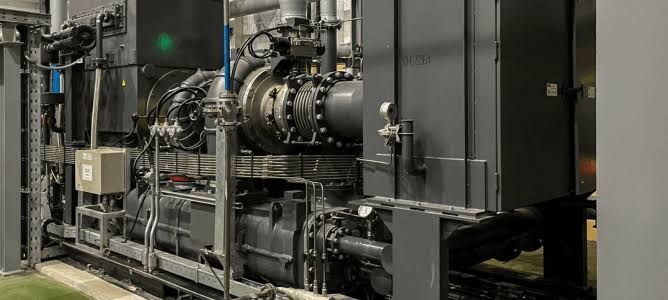
Industrial air compressors are essential equipment for generating compressed air used in manufacturing plants, processing facilities.
They convert mechanical energy into pressurized air that can power pneumatic tools, machinery, control systems, and industrial processes.
Different industries require different compressor configurations based on pressure, airflow, duty cycle, air quality, operating environment, and energy efficiency. Understanding compressor types and system requirements can help engineers select suitable equipment for a particular application.
What Are Industrial Air Compressors?
An industrial air compressor is a mechanical machine that takes atmospheric air, compresses it to a higher pressure, and stores or distributes the compressed air through a pneumatic system.
Compressed air can then be used for:
- Pneumatic tools
- Automation equipment
- Air-operated valves
- Material handling systems
- Spray applications
- Instrumentation
- Cleaning processes
- Manufacturing machinery
- Process control
Industrial systems can range from relatively compact units to large centralized compressor installations serving an entire facility.
How Do Industrial Air Compressors Work?
The basic compression cycle involves several stages.
1. Air Intake
Atmospheric air enters the compressor through an intake filter. The filter helps prevent dust and other particles from entering the compression mechanism.
2. Air Compression
The compressor reduces the volume of incoming air, increasing its pressure. The exact mechanism depends on the compressor design.
3. Heat Management
Compression generates heat. Cooling systems, including air-cooled or water-cooled configurations, help control operating temperatures.
4. Moisture Separation
Compressed air can contain water vapor and other contaminants. After compression, separators and dryers can be used to improve air quality.
5. Storage and Distribution
Compressed air may be directed into an air receiver and then distributed through piping to production equipment and pneumatic devices.
Major Types of Industrial Air Compressors
The most common compressor categories are positive-displacement and dynamic compressors.
Rotary Screw Air Compressors
Rotary screw compressors use two intermeshing rotors to compress air continuously. They are widely used for applications requiring a steady supply of compressed air.
Typical applications include:
- Manufacturing plants
- Automotive production
- Food processing
- Packaging
- Textile production
- General industrial operations
Variable-speed configurations can adjust motor speed according to changing air demand.
Reciprocating Air Compressors
Reciprocating compressors use pistons moving inside cylinders to compress air. They are suitable for applications requiring intermittent operation or relatively high pressure.
They are commonly used in workshops, smaller industrial systems, maintenance operations, and specialized production processes.
Centrifugal Compressors
Centrifugal compressors use rotating impellers to accelerate air and convert that velocity into pressure. They are generally used in large-scale installations requiring high continuous airflow.
Applications can include large manufacturing facilities, chemical processing, power generation, and other continuous industrial processes.
Scroll Compressors
Scroll compressors use two spiral-shaped elements to progressively compress air. Their design can provide relatively quiet operation and is used in applications where clean compressed air and lower vibration are important.
Oil-Free and Oil-Lubricated Compressors
Industrial air compressors can also be categorized according to their lubrication approach.
| Compressor Type | General Characteristics | Common Applications |
|---|---|---|
| Oil-Lubricated | Uses lubricant within the compression system | General manufacturing |
| Oil-Free | Compression chamber designed without oil lubrication | Food, pharmaceutical, electronics |
| Rotary Screw | Continuous rotary compression | Manufacturing plants |
| Reciprocating | Piston-based compression | Intermittent and high-pressure applications |
| Centrifugal | Dynamic compression | Large continuous-air systems |
| Scroll | Spiral compression mechanism | Clean and quieter applications |
The appropriate configuration depends on required air purity, pressure, airflow, operating schedule, and industry requirements.
Key Components of an Industrial Air Compressor
A complete compressor installation can contain many mechanical and control components.
Air End
The air end is the primary compression mechanism. Its configuration depends on whether the system uses screws, pistons, scrolls, or centrifugal impellers.
Electric Motor
The motor provides the mechanical energy needed to drive the compression mechanism. Motor efficiency has a direct effect on overall system energy consumption.
Air Filter
The intake filter removes airborne contaminants before air reaches the compression system.
Cooling System
Cooling equipment removes heat generated during compression. Proper temperature management supports reliable operation.
Air Receiver
An air receiver stores compressed air and can help stabilize pressure during fluctuations in demand.
Control System
Modern compressors can use electronic controllers to monitor pressure, temperature, operating hours, motor conditions, and system demand.
Air Dryer
A dryer removes moisture from compressed air when the application requires controlled humidity or a specific air-quality class.
Applications of Industrial Air Compressors
Compressed air is used across numerous industries.
Manufacturing
Factories use compressed air for pneumatic tools, automation systems, actuators, material handling, and production machinery.
Automotive Manufacturing
Automotive plants can use compressed air for assembly equipment, painting systems, robotic tools, fastening equipment, and various production processes.
Food Processing
Compressed air may be used for packaging, conveying, automation, and process equipment. Where compressed air can contact products or critical surfaces, appropriate air-quality requirements must be considered.
Pharmaceutical Production
Pharmaceutical facilities may require tightly controlled compressed-air quality for manufacturing and process applications.
Construction
Portable compressors can power pneumatic breakers, drills, nailers, impact tools, and other equipment used on construction sites.
Energy and Process Industries
Large compressor systems can support instrumentation, process operations, control systems, and specialized industrial equipment.
Industrial Air Compressor Specifications
Several specifications should be reviewed when evaluating a compressor.
Airflow
Airflow is commonly expressed as CFM, m³/min, or another volumetric flow unit. The required airflow depends on the connected equipment and peak demand.
Operating Pressure
Pressure is typically expressed in PSI, bar, or MPa. The compressor must meet the pressure requirements of the pneumatic system without unnecessary pressure generation.
Motor Power
Motor ratings are commonly expressed in horsepower or kilowatts. Larger airflow and pressure requirements generally require greater mechanical power.
Duty Cycle
Duty cycle describes how frequently and continuously the compressor operates. Continuous production environments require equipment designed for sustained operation.
Air Quality
Applications may require different levels of particulate, oil, and moisture control. Dryers, filters, and oil-free compressor technology can be integrated where necessary.
Energy Efficiency in Compressed Air Systems
Compressed air can represent a significant portion of energy consumption in some industrial facilities. System efficiency therefore depends on more than compressor motor efficiency alone.
Important factors include:
- Correct compressor sizing
- Pressure management
- Variable-speed control
- Leakage reduction
- Proper piping design
- Air-demand management
- Efficient cooling
- Regular filter maintenance
- Appropriate dryer operation
- Avoiding unnecessary compressed-air use
A compressor that is oversized for the actual demand may operate inefficiently, particularly when demand varies substantially during production.
Compressor Selection Factors
Selecting industrial air compressors requires an evaluation of the complete application.
Determine Air Demand
Calculate normal, minimum, and peak compressed-air requirements. Include simultaneous operation of pneumatic equipment where applicable.
Establish Required Pressure
Identify the pressure required at the point of use. Distribution losses should be considered when determining the compressor operating pressure.
Consider Operating Hours
A compressor used continuously requires a different configuration from equipment operating for short periods each day.
Evaluate Air Quality
Determine whether the application requires general-purpose compressed air, dried air, or highly controlled oil-free air.
Consider the Installation Environment
Temperature, humidity, dust, ventilation, available floor space, and cooling-water availability can influence compressor configuration.
Maintenance of Industrial Air Compressors
Regular maintenance supports reliable operation and helps prevent unexpected downtime.
Common maintenance activities include:
- Inspecting intake filters
- Checking lubricant levels where applicable
- Inspecting belts and couplings
- Checking operating temperatures
- Inspecting hoses and piping
- Testing safety devices
- Checking condensate systems
- Inspecting air dryers
- Monitoring pressure and airflow
- Checking for compressed-air leaks
Maintenance intervals should follow the equipment manufacturer's technical documentation and actual operating conditions.
Common Problems in Compressed Air Systems
Excessive Pressure Drop
Pressure losses can result from undersized piping, clogged filters, restrictive fittings, or poorly designed distribution networks.
Air Leakage
Leaks around fittings, hoses, valves, and connections can increase compressor workload and energy consumption.
Excessive Temperature
High operating temperatures can indicate inadequate ventilation, cooling problems, dirty heat exchangers, or other mechanical issues.
Moisture in Compressed Air
Water contamination can result from inadequate drying, condensation, or improper condensate management.
Inconsistent Pressure
Pressure fluctuations can occur when compressor capacity does not match demand or when storage and distribution systems are inadequately configured.
Automation and Smart Compressor Systems
Modern industrial air compressors increasingly incorporate sensors, controllers, and connectivity features.
Smart monitoring can track:
- Pressure
- Temperature
- Motor condition
- Operating hours
- Energy consumption
- Maintenance intervals
- Load and unload cycles
- System alarms
Variable-speed drive technology can adjust compressor output according to changing demand. Multiple compressors can also be coordinated through centralized control systems to balance operating loads.
Safety Considerations
Compressed air systems operate under pressure and require appropriate safety practices.
Important considerations include:
- Use pressure-rated components.
- Inspect hoses and fittings regularly.
- Maintain pressure-relief devices.
- Follow electrical safety procedures.
- Prevent unauthorized modification of pressure vessels.
- Keep cooling and ventilation systems unobstructed.
- Follow manufacturer maintenance procedures.
- Train personnel in pneumatic equipment safety.
Air receivers and other pressure-containing components should be inspected according to applicable regulations and engineering requirements.
Frequently Asked Questions
What are industrial air compressors used for?
They generate compressed air for pneumatic tools, automation equipment, manufacturing machinery, instrumentation, packaging systems, construction tools, and various industrial processes.
Which type of industrial compressor is commonly used for continuous production?
Rotary screw compressors are commonly used where a steady supply of compressed air is required. Large facilities with very high continuous airflow may use centrifugal compressor systems.
What is the difference between oil-free and oil-lubricated compressors?
Oil-lubricated compressors use lubricant within the compression mechanism, while oil-free designs avoid oil lubrication in the compression chamber. The appropriate choice depends on required air purity and application conditions.
How can compressed-air system efficiency be improved?
Efficiency can be improved through appropriate compressor sizing, leak detection, pressure optimization, efficient controls, proper maintenance, suitable piping, and demand management.
What specifications are important when selecting an industrial air compressor?
Key specifications include airflow, operating pressure, motor power, duty cycle, air quality, cooling method, installation environment, and control requirements.
Conclusion
Industrial air compressors support a wide range of manufacturing, construction, processing, and automation activities. Rotary screw, reciprocating, centrifugal, and scroll technologies each have different operating characteristics and application areas.
Effective compressor selection requires more than comparing pressure and motor ratings. Air demand, operating schedule, air quality, energy efficiency, installation conditions, maintenance requirements, and distribution-system design should all be evaluated together.
As industrial facilities adopt connected controls and automated monitoring, compressor systems are becoming increasingly integrated with broader energy-management and production systems.