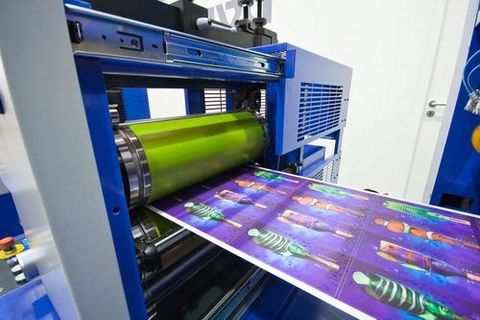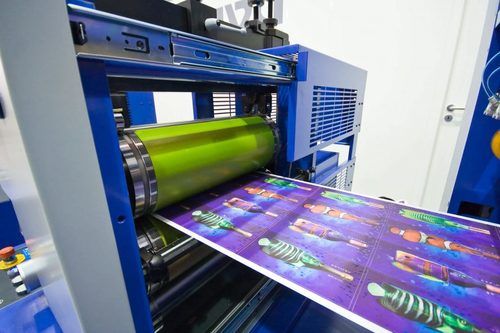
Industrial offset printing machines are high-performance printing systems designed to transfer ink from a printing.
This indirect printing method is widely used for producing books, magazines, brochures, packaging materials, commercial documents, labels, and other printed products.
Modern offset presses can incorporate multiple printing units, automated plate handling, computerized controls, inline inspection, and advanced ink and dampening systems. Machine selection depends on print format, substrate, color requirements, production volume, print quality, automation, and finishing integration.
What Are Industrial Offset Printing Machines?
Industrial offset printing machines, commonly called offset presses, use an indirect printing process.
Instead of transferring ink directly from the plate to the substrate, the image is transferred through a rubber blanket. The blanket then transfers the image onto paper, board, or another compatible substrate.
Offset printing commonly uses the interaction between oil-based ink and a water-based dampening solution to distinguish image and non-image areas on the plate.
Common press configurations include:
- Sheetfed offset presses
- Web offset presses
- Heatset web presses
- Coldset web presses
- Single-color presses
- Multi-color presses
- UV offset presses
- Specialized packaging presses
How Do Industrial Offset Printing Machines Work?
The offset printing process involves several coordinated stages.
1. Plate Preparation
The required image is transferred to a printing plate.
Modern plate-making processes can use computer-to-plate workflows to prepare plates directly from digital production files.
2. Dampening
The plate receives a controlled amount of dampening solution.
The non-image areas retain the dampening solution while the image areas are prepared to accept ink.
3. Inking
Ink is distributed through a series of rollers before reaching the plate.
The ink adheres to the image areas.
4. Blanket Transfer
The inked image moves from the plate onto the rubber blanket.
5. Substrate Transfer
The blanket transfers the image onto the paper or other substrate as it passes through the impression cylinder.
6. Drying or Curing
Depending on the ink and press configuration, the printed material may undergo air drying, heat drying, infrared drying, or UV curing.
Types of Industrial Offset Printing Machines
Different offset press designs are intended for different production requirements.
Sheetfed Offset Printing Machines
Sheetfed presses feed individual sheets into the printing units.
They are commonly used for:
- Brochures
- Books
- Business documents
- Magazines
- Catalogs
- Packaging sheets
- High-quality commercial print
Sheetfed presses can provide precise registration and flexible substrate handling.
Web Offset Printing Machines
Web offset presses use continuous rolls of paper rather than individual sheets.
They are designed for high-volume continuous production.
Applications can include:
- Newspapers
- Magazines
- Catalogs
- Books
- Inserts
- Continuous printed materials
Heatset Web Offset Presses
Heatset presses use heated drying systems to rapidly dry suitable inks on coated or other compatible papers.
They are commonly associated with high-speed commercial publishing.
Coldset Web Offset Presses
Coldset systems allow ink to dry primarily through absorption and oxidation rather than a heated drying oven.
They are widely associated with suitable uncoated paper applications.
UV Offset Printing Machines
UV offset presses use ultraviolet energy to cure specially formulated inks.
The process can provide rapid curing and can support selected substrates that require immediate ink curing.
Multi-Color Offset Printing Machines
Multi-color presses contain several printing units arranged in sequence.
A four-color configuration commonly uses cyan, magenta, yellow, and black, while larger configurations can include additional colors or specialty coatings.
Major Components of Industrial Offset Printing Machines
| Component | Primary Function |
|---|---|
| Plate Cylinder | Holds the printing plate |
| Blanket Cylinder | Transfers the image from plate |
| Impression Cylinder | Presses substrate against blanket |
| Ink Rollers | Distribute and transfer ink |
| Dampening System | Controls dampening solution |
| Feeder | Introduces sheets or web material |
| Registration System | Aligns color layers |
| Delivery Unit | Collects printed sheets |
| Drying System | Dries or cures suitable inks |
| Control System | Manages press operation |
| Sensors | Monitor selected process conditions |
The exact configuration depends on the press design.
Offset Printing Process Parameters
Several technical factors influence print quality.
Ink Viscosity
Ink flow characteristics affect transfer through the roller train and onto the substrate.
Dampening Balance
The relationship between ink and dampening solution needs to remain within an appropriate operating range.
Excessive dampening can weaken ink density, while insufficient dampening can contribute to unwanted ink in non-image areas.
Printing Pressure
The relationship between plate, blanket, impression cylinder, and substrate influences image transfer.
Registration
Registration refers to the alignment of different colors and printed elements.
Accurate registration is particularly important for multi-color printing.
Printing Speed
Higher press speeds can increase production throughput but may require carefully controlled ink, dampening, drying, and substrate conditions.
Substrates Used in Offset Printing
Industrial offset presses can be configured for various compatible substrates.
Common materials include:
- Uncoated paper
- Coated paper
- Cardstock
- Paperboard
- Specialty papers
- Selected synthetic substrates
Substrate properties such as thickness, surface finish, absorbency, stiffness, and moisture content can influence print performance.
Applications of Industrial Offset Printing Machines
Commercial Printing
Offset presses are commonly used for:
- Brochures
- Flyers
- Catalogs
- Business documents
- Corporate publications
Publishing
Applications include:
- Books
- Magazines
- Journals
- Newspapers
- Educational publications
Packaging
Suitable offset presses can print on paperboard and other compatible packaging substrates.
Applications include:
- Folding cartons
- Product packaging
- Sleeves
- Inserts
Labels
Offset technology can produce high-resolution graphics and detailed color reproduction for suitable label materials.
Security and Specialty Printing
Specialized offset configurations can be incorporated into controlled printing environments for selected security and specialty applications.
Automation in Industrial Offset Printing
Modern offset presses use extensive automation to improve setup consistency and process monitoring.
Automation can control:
- Plate positioning
- Ink settings
- Dampening
- Registration
- Feeder operation
- Press speed
- Blanket cleaning
- Washing cycles
- Drying
- Quality monitoring
Computerized Press Controls
Central control systems allow operators to configure and monitor multiple press functions through an integrated interface.
Automatic Registration
Automated registration systems can detect and correct selected alignment deviations between printing units.
Automatic Plate Handling
Some modern presses incorporate automated plate loading and positioning systems to reduce setup time.
Inline Inspection
Camera-based inspection systems can monitor printed sheets or web material for selected defects such as registration errors, missing elements, or color variation.
Color Management in Offset Printing
Color consistency is an important consideration for multi-color offset printing.
Common color-management practices include:
- Standardized ink densities
- Color calibration
- Spectrophotometric measurement
- Proof comparison
- Registration monitoring
- Consistent substrate selection
The printing environment can also influence ink behavior and color stability.
Common Industrial Offset Printing Problems
Color Variation
Color differences can result from changes in ink density, dampening balance, substrate characteristics, temperature, or press settings.
Registration Errors
Misalignment between colors can be caused by mechanical movement, substrate variation, incorrect settings, or press conditions.
Ink Set-Off
Ink can transfer from one printed surface to another when drying or handling conditions are inadequate.
Ghosting
Uneven ink distribution can create unwanted differences in image density in selected areas.
Paper Feeding Problems
Feeding issues can result from paper moisture, static electricity, improper stack preparation, feeder settings, or substrate characteristics.
Plate Wear
Plate deterioration can affect image quality and may result from excessive mechanical stress, chemical conditions, or incorrect processing.
Maintenance of Industrial Offset Printing Machines
Regular maintenance is essential for maintaining press accuracy and consistent operation.
Typical activities include:
- Cleaning ink rollers
- Cleaning dampening systems
- Inspecting blankets
- Checking cylinders
- Inspecting bearings
- Checking gears
- Cleaning sensors
- Inspecting feeder components
- Checking registration mechanisms
- Maintaining drying systems
- Inspecting electrical controls
- Lubricating specified components
Maintenance schedules should follow equipment documentation, operating conditions, and press utilization.
How to Select Industrial Offset Printing Machines
Machine selection should begin with the intended printing application.
Consider:
- Printing format
- Sheet or web operation
- Number of colors
- Substrate type
- Maximum sheet size
- Printing speed
- Ink technology
- Drying or curing requirements
- Registration accuracy
- Automation
- Inline inspection
- Finishing integration
- Machine footprint
- Maintenance requirements
For specialized applications, testing representative substrates and print designs can help determine the appropriate press configuration.
Sheetfed vs Web Offset Printing
| Factor | Sheetfed Offset | Web Offset |
|---|---|---|
| Material Feed | Individual sheets | Continuous paper web |
| Production Format | Sheet-based | Roll-based |
| Typical Production | Commercial and packaging | High-volume publishing |
| Setup Flexibility | High | Suited to continuous production |
| Finishing Integration | Flexible | Can support inline systems |
| Common Applications | Books, brochures, packaging | Newspapers, magazines, catalogs |
The appropriate configuration depends on production volume, substrate, format, and finishing requirements.
How to Evaluate Industrial Offset Printing Machine Manufacturers
When evaluating industrial offset printing machine manufacturers, consider their press technology and technical capabilities.
Important factors include:
- Press configuration
- Maximum print format
- Number of printing units
- Maximum operating speed
- Substrate compatibility
- Ink technology
- Drying system
- Registration controls
- Automation
- Plate-handling technology
- Inline inspection
- Control software
- Technical documentation
- Maintenance requirements
A suitable manufacturer should be able to match the press configuration with the required substrate, print format, color configuration, production requirements, and quality standards.
Energy Efficiency in Offset Printing
Energy consumption varies according to press configuration, operating speed, drying technology, auxiliary equipment, and production conditions.
Heatset and UV systems can have additional energy requirements because of their drying or curing processes.
Efficient motors, optimized press settings, appropriate maintenance, and automated power-management functions can help reduce unnecessary energy use.
Frequently Asked Questions
What are industrial offset printing machines used for?
Industrial offset printing machines are used for producing books, magazines, brochures, catalogs, packaging, labels, newspapers, business documents, and other printed materials.
What is the difference between sheetfed and web offset printing?
Sheetfed offset presses process individual sheets, while web offset presses use continuous rolls of paper. Sheetfed systems are common in commercial and packaging applications, while web presses are suited to many high-volume continuous printing applications.
How does offset printing produce high-quality images?
Offset printing uses controlled plate, blanket, ink, dampening, and impression-cylinder systems to transfer images accurately onto suitable substrates. Multi-color presses can combine several printing units for detailed color reproduction.
What factors affect offset printing quality?
Ink characteristics, dampening balance, registration, printing pressure, substrate properties, press speed, plate condition, drying, and machine calibration can all influence print quality.
How do I select an industrial offset printing machine?
Evaluate the required print format, substrate, number of colors, production volume, printing speed, ink technology, drying requirements, automation, registration control, inspection systems, and finishing integration.
Conclusion
Industrial offset printing machines use an indirect plate-to-blanket-to-substrate process to produce consistent printed materials at industrial scale. Sheetfed, web, heatset, coldset, UV, and multi-color configurations address different printing requirements.
Print quality depends on accurate registration, ink and dampening balance, substrate characteristics, printing pressure, plate condition, machine calibration, and operating speed. Modern automation can further support plate handling, registration, ink control, inspection, and press monitoring.
When selecting industrial offset printing equipment, manufacturers should evaluate print format, substrate requirements, color configuration, production volume, drying technology, automation, quality-control systems, and maintenance requirements. Matching the press design to the intended application is essential for consistent printing performance.