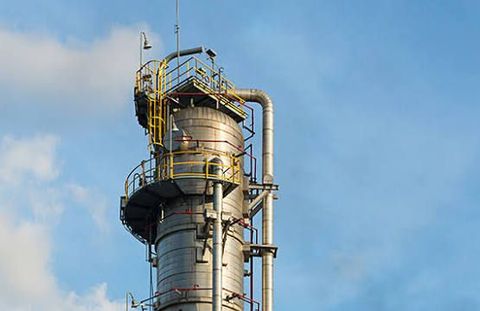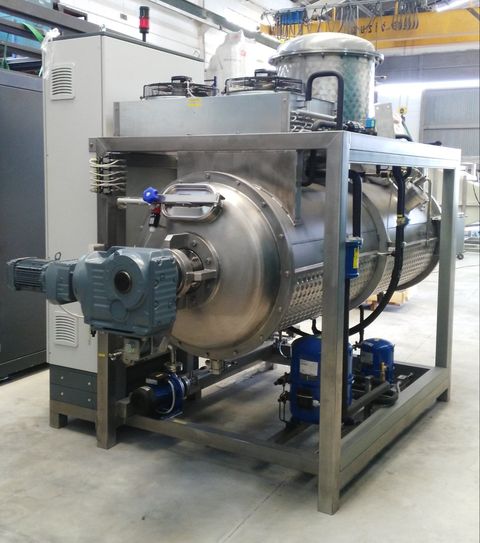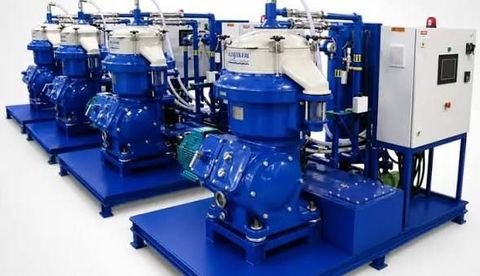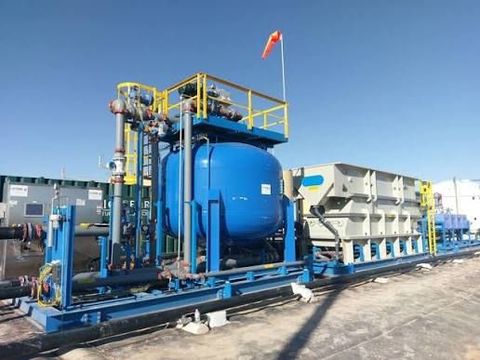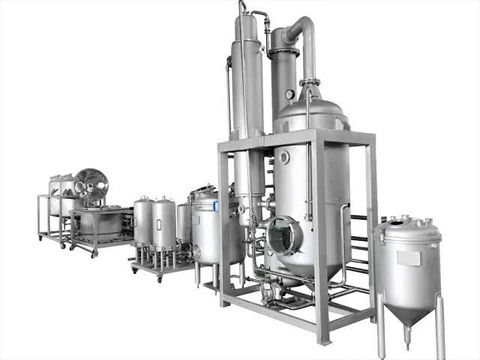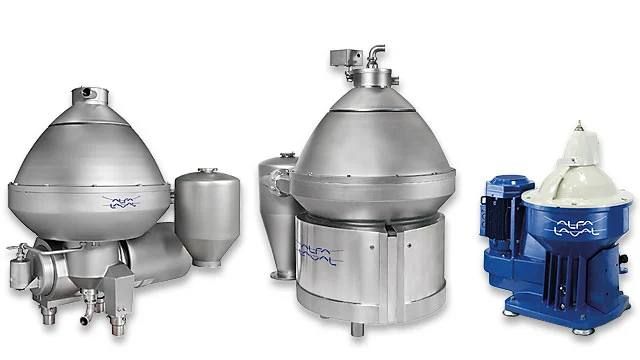
Industrial separation equipment refers to machines and systems that separate materials, particles, liquids, gases, or chemical components according to properties such as size, density, pressure, or composition.
These systems are used across manufacturing, food processing, chemical production, mining, pharmaceuticals, water treatment, and other industrial environments.
Common examples include centrifuges, filtration systems, separators, cyclones, screens, clarifiers, and membrane systems. Each type is designed for particular material conditions and separation requirements. Industrial separation equipment helps processing lines remove unwanted material, recover useful components, and prepare substances for subsequent production stages.
How Separation Systems Work
The basic principle is to create a difference between materials. A filter may retain solid particles while allowing liquid to pass through, while a centrifuge uses rotational movement to separate materials with different densities.
The selection of equipment depends on factors such as particle size, material characteristics, flow rate, temperature, pressure, moisture content, and the required degree of separation. Incorrect equipment selection can affect downstream processes and increase operational difficulties.
| Equipment Type | Common Separation Principle | Typical Application |
|---|---|---|
| Centrifuge | Density and centrifugal force | Liquid-solid separation |
| Filter | Particle retention | Solid-liquid separation |
| Cyclone | Airflow and particle density | Dust and particle removal |
| Screen | Particle size | Material classification |
| Membrane System | Molecular or particle size | Liquid purification |
Importance
Industrial separation equipment plays an important role because many manufacturing processes depend on controlled material separation. When unwanted particles remain in a process stream, they can affect product consistency, equipment operation, and subsequent processing stages.
Efficiency can also decline when separation equipment becomes overloaded, blocked, poorly adjusted, or unsuitable for the material being processed. Monitoring pressure differences, flow conditions, temperature, vibration, and separation performance can help operators identify changes in system behavior.
Where These Systems Are Used
Industrial separation equipment appears in many sectors. Food processing may use separators and filtration systems to handle ingredients and processing liquids. Mining operations can use screens, classifiers, and centrifugal equipment to separate materials according to physical characteristics.
Chemical and manufacturing facilities may use filtration, membrane separation, or centrifugal systems to manage process streams. Wastewater facilities also rely on screening, clarification, filtration, and related processes to separate solids and other unwanted components.
Factors That Affect Efficiency
Several operating conditions can influence separation performance:
- Material composition and particle characteristics
- Feed flow rate and concentration
- Temperature and viscosity
- Filter or screen condition
- Pressure and airflow
- Equipment configuration
- Cleaning and inspection intervals
Understanding these factors provides useful context when examining why a separation process may behave differently over time.
Tools and Resources
Several practical resources can help readers understand or evaluate industrial separation processes. Equipment specification sheets can provide information about operating ranges, capacity, materials of construction, and separation principles.
Process engineers and operators may also use flow-rate calculators, pressure-drop calculations, particle-size references, mass-balance worksheets, and equipment selection templates. Manufacturer technical documentation and engineering reference databases can provide additional information about individual separation technologies.
Useful Information Sources
Helpful resources include process-flow diagrams, maintenance checklists, particle-size conversion tables, filtration calculations, and process monitoring records. These materials can make it easier to compare operating conditions and understand how individual equipment components fit within a larger production system.
For complex installations, technical evaluation generally considers the complete process rather than a single machine. Feed characteristics, downstream requirements, operating conditions, and environmental factors can all influence the appropriate separation approach.
FAQs
What is industrial separation equipment?
Industrial separation equipment consists of machines and systems designed to separate different materials or components based on characteristics such as particle size, density, composition, or physical state.
What types of industrial separation equipment are commonly used?
Common types include centrifuges, filters, cyclones, screens, clarifiers, separators, and membrane systems. The appropriate type depends on the material and separation objective.
How does industrial separation equipment affect efficiency?
Separation equipment can influence downstream processing by controlling the amount of unwanted material entering subsequent stages. Blockages, excessive loading, unsuitable operating conditions, or equipment wear can affect performance.
Where is industrial separation equipment used?
It is used in industries such as food processing, chemical manufacturing, mining, water treatment, pharmaceuticals, energy, and general manufacturing.
What factors should be considered when evaluating separation equipment?
Important factors include feed composition, particle size, flow rate, temperature, viscosity, pressure, required separation level, equipment capacity, and compatibility with the overall process.
Conclusion
Industrial separation equipment provides controlled methods for separating solids, liquids, gases, and other process components. Centrifuges, filters, cyclones, screens, and membrane systems operate according to different physical separation principles. Understanding material characteristics and operating conditions is important when examining separation performance. Monitoring process conditions can also help identify changes that may affect efficiency.