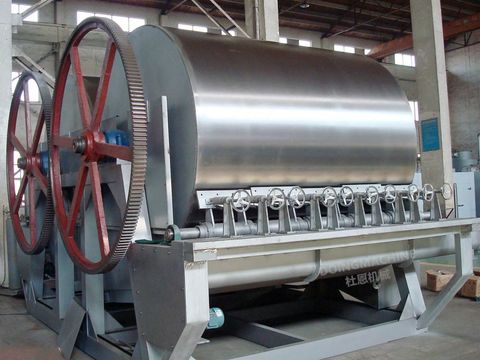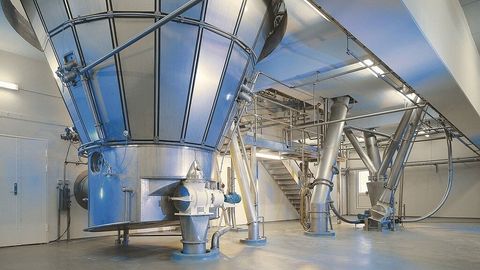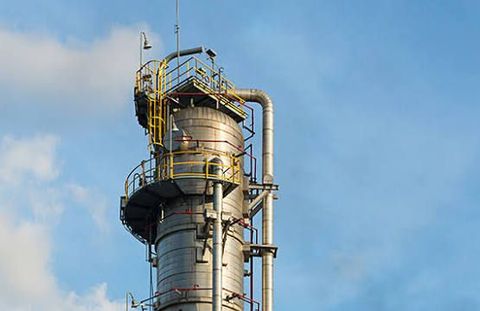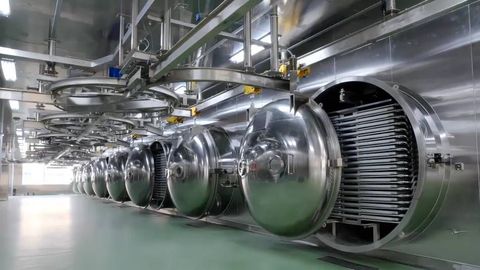
Industrial spray dryers are processing systems used to convert liquid mixtures, emulsions, or suspensions into dry powders.
The process combines controlled heat with atomization, allowing small liquid droplets to lose moisture rapidly while moving through a drying chamber. This technology is used across food processing, chemicals, ceramics, minerals, and several other manufacturing fields.
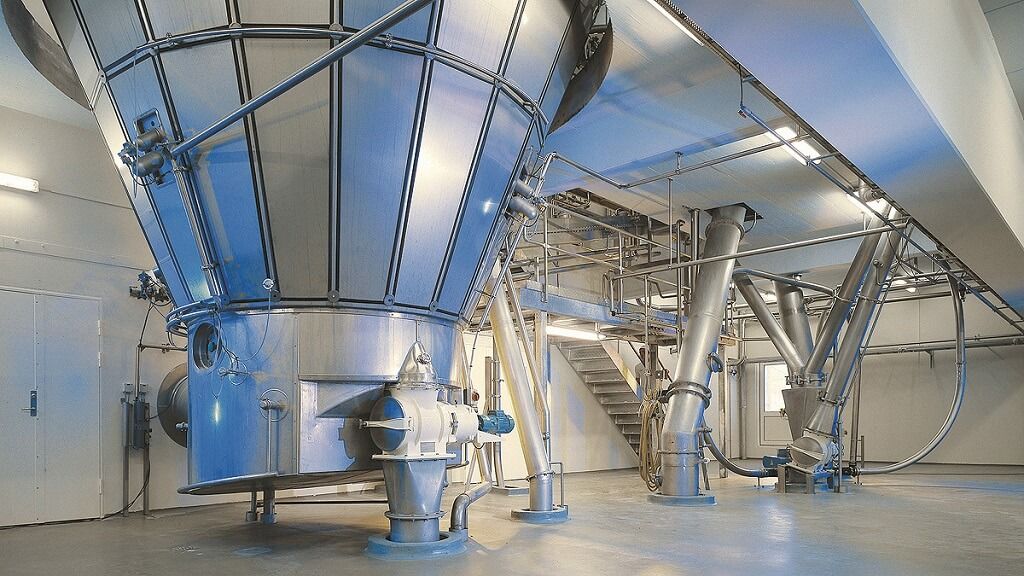
The basic concept comes from the need to create stable, easier-to-handle powder materials from liquids. Modern industrial spray dryers use equipment such as atomizers, drying chambers, air heaters, cyclones, filters, and control systems to manage the drying process.
How Industrial Spray Dryers Work
A liquid feed first enters an atomization system, where it is divided into fine droplets. These droplets contact heated air inside the drying chamber, causing moisture to evaporate. The resulting particles are then separated from the drying air and collected for further handling.
Different atomization methods can influence particle size, shape, density, and moisture levels. Common approaches include rotary atomizers, pressure nozzles, and two-fluid nozzles.
| Component | Main Function |
|---|---|
| Feed system | Moves liquid material into the dryer |
| Atomizer | Creates fine liquid droplets |
| Drying chamber | Provides controlled evaporation space |
| Air heater | Raises incoming air temperature |
| Cyclone or filter | Separates powder from air |
| Control system | Monitors and adjusts operating conditions |
Importance
Industrial spray dryers matter because many liquid materials need to be transformed into powders for storage, transportation, blending, or later processing. Drying can also change handling characteristics and make certain materials easier to incorporate into downstream production processes.
Modern spray drying technology focuses on controlling factors such as inlet air temperature, outlet temperature, feed rate, air movement, and droplet size. Careful control helps manufacturers maintain consistent powder characteristics while managing energy use and moisture removal.
Where Spray Drying Is Used
Industrial spray dryers can be found in several sectors. Food applications may include milk powders, flavor ingredients, starch-based materials, and other liquid food preparations. Chemical applications can include pigments, detergents, and specialty compounds.
Other industries use spray drying for ceramics, minerals, biotechnology materials, and agricultural ingredients. The appropriate dryer configuration depends on the feed material, desired powder properties, production scale, and heat sensitivity.
Modern Technology and Process Control
Automation has become an important part of modern spray dryer design. Sensors can monitor temperatures, pressure, airflow, feed conditions, and other operating parameters. Digital control systems can then adjust selected settings according to the process requirements.
Energy management is another important consideration. Drying requires significant thermal input because moisture must be removed from the feed material. Heat recovery, optimized airflow, insulation, and controlled operating conditions can help reduce unnecessary energy use.
Tools and Resources
Several resources can help readers understand or evaluate spray drying processes. Equipment specification sheets can provide information about chamber dimensions, evaporation capacity, atomization methods, and operating ranges.
Process calculations can also help estimate moisture removal and thermal requirements. Useful resources include:
- Moisture balance calculators: Help estimate water removal from a liquid feed.
- Thermal calculation tools: Help examine heating and evaporation requirements.
- Particle-size analysis tools: Provide information about powder distribution.
- Process monitoring systems: Track temperature, pressure, airflow, and other operating conditions.
- Equipment manuals: Explain operating principles, component functions, and maintenance requirements.
- Engineering reference guides: Provide background information about heat transfer, evaporation, and powder handling.
Selecting appropriate equipment requires attention to the characteristics of the feed material and the properties required in the finished powder. Laboratory or pilot-scale testing can also help establish suitable operating conditions before larger-scale processing.
FAQs
What are industrial spray dryers used for?
Industrial spray dryers convert liquid feeds into dry powders. They are used in food processing, chemical production, ceramics, minerals, and other manufacturing applications where controlled moisture removal is required.
How does modern spray drying technology work?
Modern spray drying technology atomizes a liquid into small droplets and exposes them to controlled heated air. Moisture evaporates rapidly, leaving dry particles that can then be separated and collected.
What factors affect industrial spray dryers?
Important factors include feed concentration, droplet size, inlet and outlet temperatures, airflow, feed rate, chamber design, and the physical properties of the material being dried.
Why is temperature control important in spray drying?
Temperature influences evaporation speed, powder moisture, particle characteristics, and the treatment of heat-sensitive materials. Monitoring both inlet and outlet conditions helps maintain controlled drying conditions.
What industries use industrial spray dryers?
Industrial spray dryers are used in food, chemical, ceramic, mineral, agricultural, and other manufacturing sectors. The specific configuration varies according to the feed material and required powder characteristics.
Conclusion
Industrial spray dryers provide a controlled method for converting liquid materials into powders through atomization and rapid moisture removal. Modern systems combine drying chambers, airflow management, separation equipment, sensors, and automated controls. Their applications span several industries where powder characteristics, moisture levels, and process consistency are important. Understanding the drying process and its major operating factors provides useful context for evaluating spray drying technology.