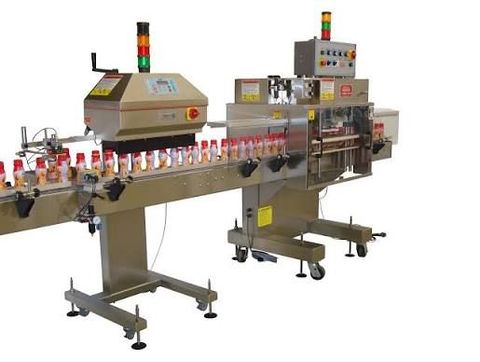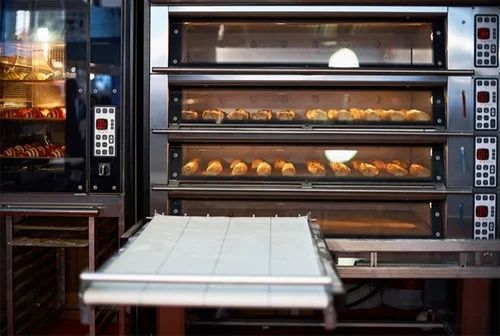
Industrial bakery ovens are specialized heating systems designed for large-scale production of bread, rolls, pastries, biscuits, cakes, pizza, and other baked foods.
They provide controlled temperature, airflow, humidity, and baking time to achieve consistent product characteristics across repeated production cycles.
Modern bakery ovens can be configured as rotary rack, tunnel, deck, convection, or specialized continuous systems. Oven selection depends on product type, production capacity, baking temperature, heating method, available space, energy source, and automation requirements.
What Are Industrial Bakery Ovens?
An industrial bakery oven is a commercial-scale thermal processing system used to bake food products under controlled conditions. Unlike small household ovens, industrial systems are designed for continuous or repeated production and can accommodate large quantities of products.
A bakery oven may incorporate:
- Heating system
- Baking chamber
- Temperature sensors
- Air circulation system
- Conveyor or rack system
- Steam system
- Exhaust system
- Insulation
- Control panel
- Safety mechanisms
The exact configuration depends on the baking process and product requirements.
How Do Industrial Bakery Ovens Work?
The baking process involves controlled heat transfer from the oven environment to the food product.
1. Product Preparation
Prepared dough or batter is loaded onto trays, racks, pans, or a conveyor system.
2. Oven Loading
Products enter the baking chamber manually, through racks, or through an automated conveyor system.
3. Heating
The oven generates heat through gas, electricity, thermal oil, or another suitable heating system.
4. Heat Distribution
Heat is transferred through radiation, convection, conduction, or a combination of these methods.
5. Baking
Controlled temperature and airflow cause physical and chemical changes in the product, including moisture migration, structure development, browning, and crust formation.
6. Steam or Humidity Control
Certain bread products require steam during early baking stages. Steam systems can introduce controlled moisture into the baking chamber.
7. Exhaust
Exhaust systems remove excess moisture and combustion gases where applicable.
8. Cooling and Unloading
After reaching the required baking condition, products exit the oven and proceed to cooling, slicing, packaging, or other downstream processes.
Types of Industrial Bakery Ovens
Different oven technologies address different bakery production requirements.
Rotary Rack Ovens
Rotary rack ovens use rotating racks or trolleys to expose products more uniformly to the oven's heating environment.
They are commonly used for:
- Bread
- Rolls
- Cakes
- Pastries
- Cookies
The rotating movement helps provide consistent exposure to heat.
Tunnel Bakery Ovens
Tunnel ovens use a conveyor to transport products continuously through multiple heating zones.
They are commonly used in high-volume production of:
- Bread
- Buns
- Biscuits
- Cookies
- Pizza
- Crackers
- Specialty baked products
Different zones can be independently controlled to create a specific baking profile.
Deck Ovens
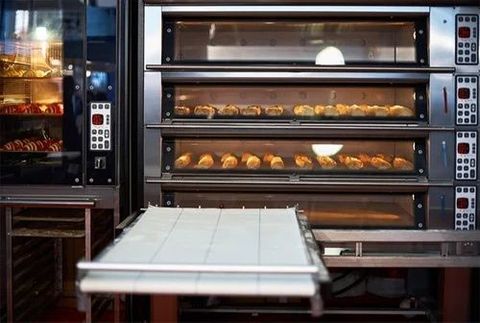
Deck ovens use separate baking chambers or decks. Heat can be transferred through the deck surface, radiant elements, and circulating air depending on the oven design.
They are widely associated with bread, pizza, artisan products, and specialty bakery production.
Convection Bakery Ovens
Convection ovens use fans to circulate heated air around the products. This can improve heat distribution and support consistent baking.
Electric Bakery Ovens
Electric ovens use electrical heating elements to generate heat. They can provide precise temperature control and are suitable for facilities where electrical infrastructure supports the required power demand.
Gas Bakery Ovens
Gas-fired ovens use combustion systems to generate heat. They are commonly used in large bakery facilities and can be configured with controlled burners and heat-distribution systems.
Key Components of Industrial Bakery Ovens
| Component | Primary Function |
|---|---|
| Heating System | Generates baking heat |
| Baking Chamber | Provides controlled baking environment |
| Burner or Heating Element | Produces thermal energy |
| Conveyor | Transports products through the oven |
| Rack System | Holds trays or pans |
| Fans | Circulate heated air |
| Temperature Sensors | Monitor oven temperature |
| Steam System | Controls humidity where required |
| Exhaust System | Removes moisture and gases |
| Insulation | Reduces heat loss |
| Control Panel | Manages operating parameters |
Component configuration varies according to oven type and production capacity.
Heating Methods Used in Bakery Ovens
Convection Heating
Heated air circulates around the product through fans and ducting. Air velocity and temperature can be controlled to influence baking uniformity.
Radiant Heating
Radiant energy transfers heat directly to the product surface and baking surfaces. It can be important for certain bread, pizza, and specialty baking applications.
Conduction
Heat can transfer directly from heated trays, decks, or baking surfaces into the product.
Combined Heating
Many industrial ovens combine multiple heat-transfer mechanisms to achieve the required baking profile.
Industrial Bakery Oven Specifications
Several technical parameters should be considered during oven selection.
Temperature Range
The oven should provide the temperature range required for the intended products.
Different products may require different baking temperatures and temperature profiles.
Baking Capacity
Capacity can be specified in terms of:
- Trays per cycle
- Racks per cycle
- Products per hour
- Kilograms per hour
- Conveyor throughput
The appropriate measurement depends on the production process.
Baking Time
Baking time depends on product size, formulation, moisture content, temperature, airflow, and desired final characteristics.
Number of Heating Zones
Tunnel ovens can contain multiple independently controlled zones. Each zone can provide different temperature and airflow conditions.
Conveyor Width and Speed
For continuous systems, conveyor dimensions and speed determine how much product can pass through the oven during a specified period.
Applications of Industrial Bakery Ovens
Industrial bakery ovens are used across a wide range of food-production environments.
Bread Production
Large-scale bakeries use industrial ovens for:
- Loaves
- Buns
- Rolls
- Baguettes
- Multigrain bread
- Specialty bread
Temperature, humidity, airflow, and baking time influence crust and crumb characteristics.
Biscuit and Cookie Production
Tunnel ovens are commonly integrated into continuous biscuit and cookie production lines. Multiple heating zones can provide controlled baking profiles.
Cake Production
Industrial ovens can process cakes, sponge products, sheet cakes, and other batter-based products.
Controlled airflow is particularly important because excessive air movement can affect delicate products.
Pizza Production
Deck, tunnel, and specialized conveyor ovens can be used for pizza production. Oven configuration depends on crust characteristics, topping composition, production volume, and baking time.
Pastry Production
Croissants, Danish pastries, puff pastry, and other products can require controlled temperature and airflow to achieve appropriate expansion and browning.
Automation in Industrial Bakery Ovens
Automation allows manufacturers to control baking conditions with greater consistency.
Automated systems can manage:
- Temperature
- Conveyor speed
- Heating zones
- Fan speed
- Steam injection
- Exhaust
- Product loading
- Product tracking
- Alarm conditions
PLC-Based Controls
Programmable logic controllers can coordinate heating, airflow, conveyor operation, steam systems, and safety functions.
Recipe Management
Advanced ovens can store baking programs containing parameters such as:
- Temperature
- Baking time
- Conveyor speed
- Steam duration
- Fan settings
- Zone temperatures
Operators can select an appropriate recipe for a particular product.
Energy Efficiency in Industrial Bakery Ovens
Energy consumption can be influenced by oven design, insulation, heating technology, production scheduling, and operating conditions.
Important efficiency considerations include:
- High-quality thermal insulation
- Controlled combustion
- Efficient burners or heating elements
- Heat recovery
- Appropriate oven sizing
- Optimized conveyor speed
- Reduced heat leakage
- Proper maintenance
- Zone-based temperature control
Heat-recovery systems can capture energy from exhaust streams and redirect it for suitable heating or preheating applications.
Steam and Humidity Control
Steam plays an important role in many bread-baking processes.
Steam can influence:
- Crust development
- Surface appearance
- Moisture retention
- Expansion
- Browning
Industrial ovens may use steam generators, injection pipes, valves, and sensors to control humidity during selected baking stages.
The required steam profile varies according to product formulation and baking process.
Quality Control in Industrial Baking
Consistent baking requires control of several process variables.
Temperature Monitoring
Sensors should monitor oven temperature at appropriate locations to identify hot or cold zones.
Product Inspection
Finished products can be evaluated for:
- Color
- Crust development
- Internal structure
- Moisture
- Weight
- Shape
- Texture
Baking Uniformity
Temperature mapping and product testing can identify variations across the oven chamber or conveyor width.
Calibration
Temperature sensors and control instruments should be periodically checked and calibrated according to facility procedures.
Common Industrial Bakery Oven Problems
Uneven Baking
Uneven baking may result from airflow problems, temperature variations, incorrect loading, conveyor issues, or poorly maintained heating systems.
Excessive Browning
Excessive surface browning can be associated with high temperature, prolonged baking, strong radiant heat, or incorrect airflow.
Under-Baking
Under-baking may result from insufficient temperature, excessive conveyor speed, poor heat transfer, or incorrect process settings.
Heat Loss
Damaged insulation, door leakage, worn seals, or poorly controlled exhaust can increase heat loss.
Temperature Fluctuation
Temperature instability may result from sensor problems, burner issues, heating-element faults, control-system errors, or inadequate maintenance.
Maintenance of Industrial Bakery Ovens
Routine maintenance helps maintain consistent thermal performance.
Important maintenance activities include:
- Inspecting heating elements or burners
- Cleaning oven interiors
- Checking fans and motors
- Inspecting conveyor systems
- Checking door seals
- Inspecting insulation
- Cleaning exhaust systems
- Checking temperature sensors
- Inspecting steam components
- Testing safety controls
- Checking electrical connections
Gas-fired equipment should also receive appropriate combustion-system inspection and safety checks.
Food Safety and Hygiene
Industrial bakery ovens form part of a broader food-production system, so hygienic design and appropriate sanitation procedures are important.
Key considerations include:
- Cleanable surfaces
- Accessible inspection areas
- Controlled product-contact zones
- Appropriate materials
- Effective removal of food residues
- Proper exhaust management
- Preventing cross-contamination
Cleaning and sanitation procedures should follow the equipment manufacturer's instructions and the facility's food-safety program.
How to Select Industrial Bakery Ovens
The right oven depends on the product and production process.
Consider:
- Product type
- Baking temperature
- Baking time
- Required throughput
- Product dimensions
- Heating method
- Steam requirements
- Number of heating zones
- Conveyor width
- Available floor space
- Energy source
- Automation requirements
- Cleaning requirements
- Maintenance access
For high-volume production, the oven should also be evaluated as part of the complete production line rather than as an isolated machine.
Industrial Bakery Ovens vs Conventional Bakery Ovens
| Feature | Industrial Bakery Ovens | Conventional Bakery Ovens |
|---|---|---|
| Production Volume | High | Low to moderate |
| Automation | Extensive options | Generally simpler |
| Temperature Zones | Multiple zones possible | Usually limited |
| Product Handling | Conveyor or rack systems | Manual or basic loading |
| Process Monitoring | Advanced sensors and controls | More basic controls |
| Production Integration | Designed for line integration | Often standalone |
The appropriate system depends on production scale, product characteristics, and facility requirements.
How to Evaluate Industrial Bakery Oven Manufacturers
When evaluating manufacturers, consider technical capabilities and application experience.
Important factors include:
- Oven technology
- Capacity range
- Heating system design
- Temperature-control capabilities
- Steam and humidity systems
- Conveyor engineering
- Energy-efficiency features
- Automation capabilities
- Safety systems
- Food-grade construction
- Testing procedures
- Maintenance requirements
- Production-line integration
Manufacturers should be able to provide technical information about temperature uniformity, throughput, energy requirements, control systems, and installation conditions.
Frequently Asked Questions
What are industrial bakery ovens used for?
Industrial bakery ovens are used for large-scale production of bread, rolls, biscuits, cookies, cakes, pastries, pizza, crackers, and other baked products.
Which type of industrial bakery oven is suitable for high-volume production?
Tunnel ovens are commonly used for continuous, high-volume baking because products move through controlled heating zones on a conveyor. The appropriate configuration depends on the product and process requirements.
What heating methods are used in industrial bakery ovens?
Industrial ovens can use gas, electricity, thermal systems, convection, radiation, conduction, or combinations of different heat-transfer methods.
Why is steam used in industrial bread ovens?
Steam can influence crust development, surface appearance, expansion, and moisture behavior during the early stages of baking. The required steam profile depends on the specific bread formulation and process.
What should be considered when selecting an industrial bakery oven?
Important factors include product type, throughput, baking temperature, baking time, heating method, conveyor configuration, steam requirements, energy source, automation, floor space, and maintenance access.
Conclusion
Industrial bakery ovens provide controlled thermal processing for large-scale production of bread, biscuits, cakes, pastries, pizza, and other baked products. Rotary rack, tunnel, deck, convection, gas, and electric oven technologies each have different characteristics suited to specific production requirements.
Consistent baking depends on accurate temperature control, appropriate airflow, baking time, humidity management, conveyor speed, and heat distribution. Equipment maintenance and regular process monitoring are also essential for stable operation.
Modern industrial bakery ovens increasingly integrate PLC controls, recipe management, multiple heating zones, automated conveyors, sensors, steam systems, and energy-management technologies. Selecting an oven as part of the complete production line can help ensure compatibility with mixing, proofing, cooling, and downstream handling equipment.