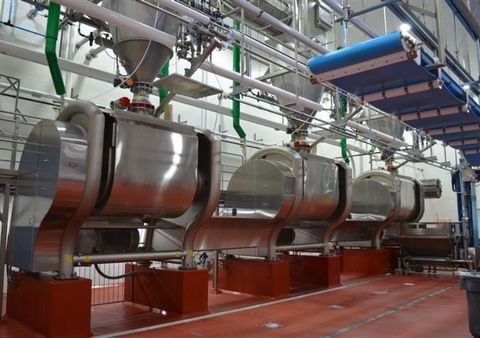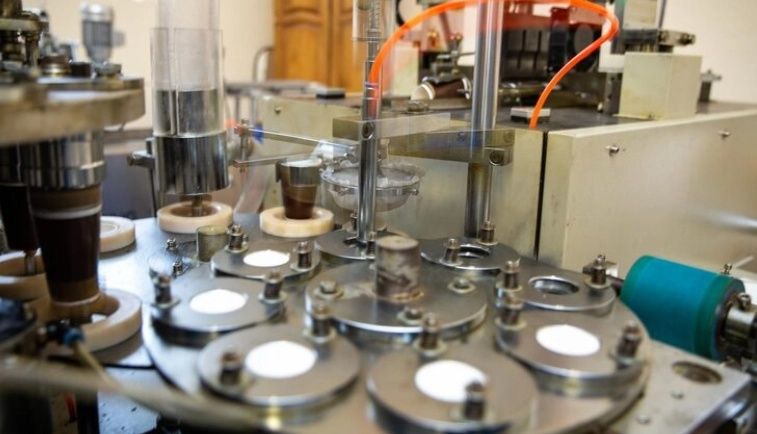
Industrial batch processing equipment is designed to process a specific quantity of material through a controlled production cycle.
Unlike continuous systems, batch equipment handles materials in defined quantities and can complete different processing stages before the next batch begins.
These systems are widely used in chemical, pharmaceutical, food, beverage, cosmetics, paints, coatings, and specialty material industries. Equipment selection depends on material properties, batch capacity, temperature, pressure, mixing requirements, and automation needs.
What Is Industrial Batch Processing Equipment?
Industrial batch processing equipment includes machinery used to mix, heat, cool, react, dry, blend, filter, or otherwise process materials in individual batches.
A typical batch process involves:
- Loading raw materials
- Measuring ingredients
- Mixing or processing
- Heating or cooling
- Monitoring process conditions
- Completing the required treatment
- Discharging the finished batch
- Cleaning and preparing for the next cycle
Batch systems are particularly useful when production requires multiple formulations, controlled recipes, or frequent product changes.
Types of Industrial Batch Processing Equipment
Batch Mixing Equipment
Batch mixers combine powders, liquids, pastes, or granular materials. Common designs include ribbon mixers, paddle mixers, planetary mixers, high-shear mixers, and twin-shaft mixers.
The mixer type is selected according to viscosity, particle characteristics, required shear, batch volume, and mixing time.
Batch Reactors
Batch reactors are used for controlled chemical and biochemical reactions. They may include agitators, heating and cooling jackets, temperature sensors, pressure controls, and automated valves.
Batch Drying Equipment
Batch dryers remove moisture or solvents from materials. Tray dryers, vacuum dryers, rotary dryers, and other configurations can be selected according to material sensitivity and drying requirements.
Batch Filtration Systems
Batch filtration equipment separates solids from liquids or removes unwanted particles. Filter presses, cartridge filters, bag filters, and specialized filtration systems can be integrated into batch production lines.
Batch Blending Systems
Batch blending systems combine different materials according to defined formulations. They are commonly used for food ingredients, chemicals, powders, polymers, coatings, and specialty materials.
Main Components
A complete industrial batch processing system can include several interconnected components.
| Component | Primary Function |
|---|---|
| Processing vessel | Holds the batch |
| Agitator | Mixes process materials |
| Heating system | Controls temperature increase |
| Cooling system | Removes process heat |
| Sensors | Monitor process parameters |
| Pumps | Transfer materials |
| Valves | Regulate material flow |
| Load cells | Measure batch quantity |
| Control panel | Manages equipment operation |
| Discharge system | Removes processed material |
The configuration varies according to the process, material, production volume, and required control level.
Applications Across Industries
Industrial batch processing systems are used in many manufacturing environments.
Chemical Industry
Chemical plants use batch equipment for reactions, formulation, blending, crystallization, neutralization, and specialty chemical production.
Pharmaceutical Industry
Pharmaceutical applications can include formulation, granulation, blending, coating, and other controlled production stages.
Food and Beverage Industry
Food processing applications include mixing, cooking, heating, cooling, emulsification, fermentation, and ingredient preparation.
Cosmetics Industry
Batch systems are used for creams, lotions, gels, shampoos, emulsions, and other formulated products.
Paints and Coatings
Mixers, dispersers, reactors, and filtration systems can be combined for pigment dispersion, resin processing, and coating formulation.
Automation in Batch Processing
Automation can improve process consistency and provide greater control over individual production cycles.
PLC-based systems can manage temperature, mixing speed, valve sequences, processing time, and equipment interlocks. SCADA systems can provide centralized monitoring, alarms, historical process data, and production visualization.
Recipe management is another important feature. Operators can define specific processing parameters for different products and repeat established production sequences with greater consistency.
Important Specifications
Several specifications should be evaluated when selecting batch processing machinery.
- Batch capacity: Determines the quantity processed per cycle.
- Working volume: Indicates the practical operating volume of a vessel.
- Temperature range: Defines heating and cooling requirements.
- Pressure rating: Important for pressurized or vacuum operations.
- Mixing speed: Influences blending, suspension, and heat transfer.
- Material construction: Should be compatible with the processed substances.
- Automation level: Can range from manual controls to integrated automated systems.
- Cleaning requirements: Important where multiple formulations are processed.
Batch Processing vs Continuous Processing
| Factor | Batch Processing | Continuous Processing |
|---|---|---|
| Production method | Defined batches | Continuous material flow |
| Product flexibility | Generally high | Often lower |
| Process control | Batch-specific | Continuous |
| Recipe changes | Relatively adaptable | May require greater adjustment |
| Production suitability | Varied production | High-volume processes |
| Typical configuration | Vessel-based | Flow-based |
The appropriate approach depends on production volume, material characteristics, process complexity, and product variety.
Maintenance and Safety
Regular maintenance helps maintain equipment reliability and process consistency. Important activities include inspecting agitators, pumps, valves, seals, sensors, electrical panels, heating systems, and cooling circuits.
Safety systems may include pressure relief devices, emergency shutdowns, temperature alarms, level protection, equipment guarding, ventilation, and appropriate operating procedures. Applications involving chemicals, high temperatures, or pressurized vessels require additional hazard controls.
How to Select Batch Processing Equipment
Selection should begin with the material and process requirements. Evaluate viscosity, density, particle size, corrosiveness, temperature sensitivity, batch capacity, processing time, and required mixing conditions.
Next, consider automation, construction materials, cleaning requirements, equipment integration, maintenance access, and safety features. Manufacturers should also be evaluated based on process experience, technical documentation, equipment configuration, automation capabilities, and integration expertise.
Conclusion
Industrial batch processing equipment provides controlled and flexible production for industries that process materials in defined quantities. Mixers, reactors, dryers, filtration systems, blending equipment, sensors, pumps, and automated controls can be combined according to process requirements.
A suitable system should match the material characteristics, batch capacity, operating conditions, automation requirements, safety needs, and wider production workflow. Careful equipment selection and preventive maintenance can support consistent processing and reliable plant operation.