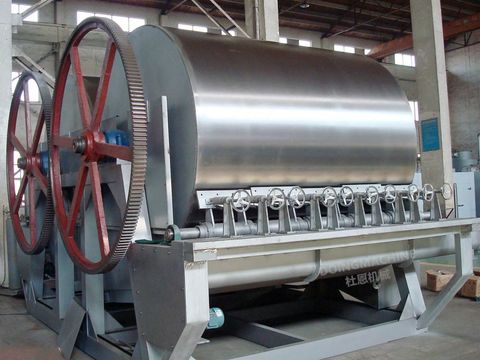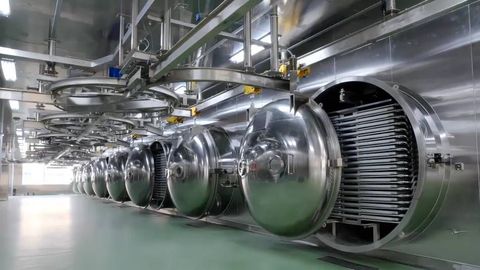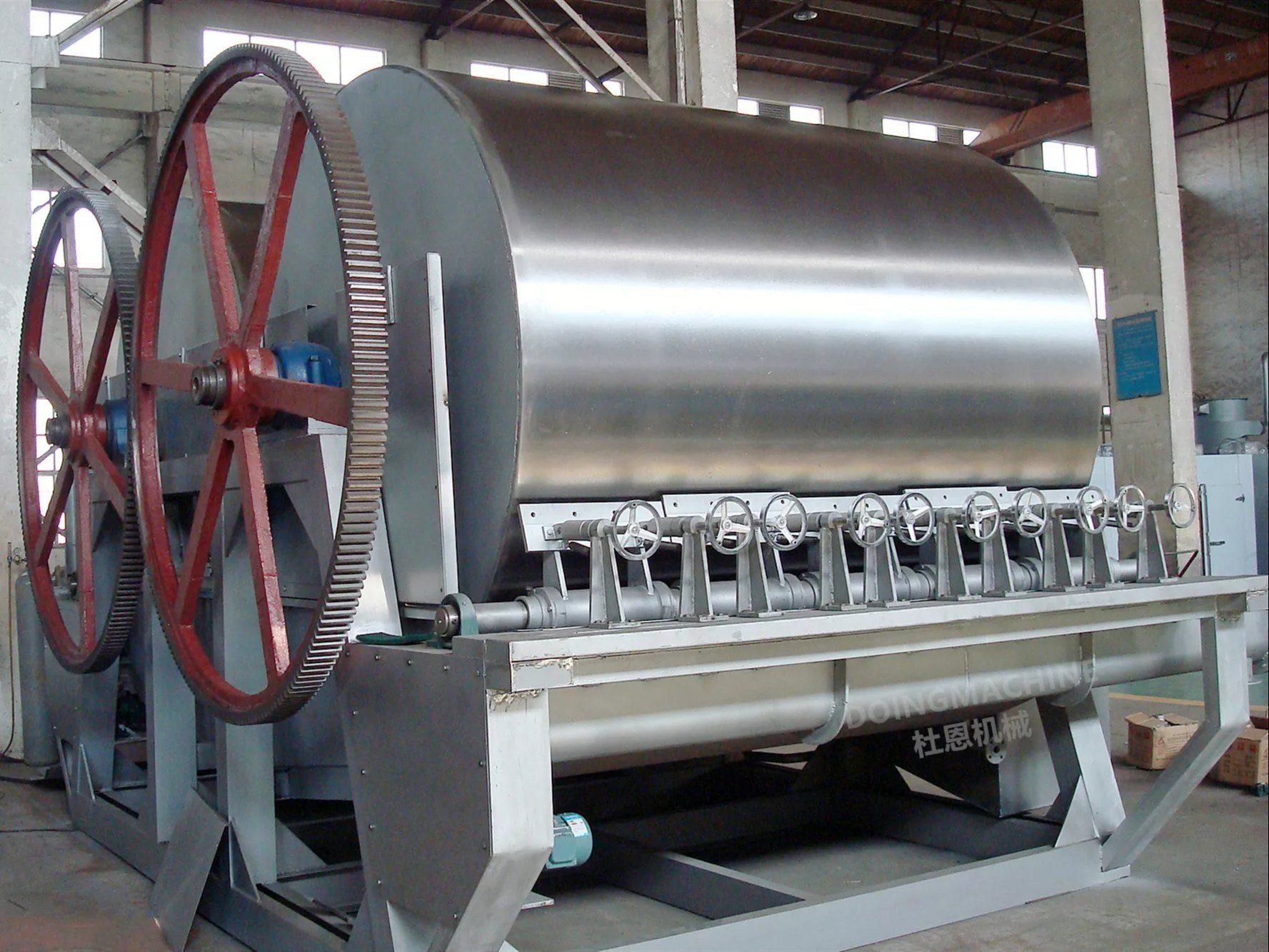
Industrial drum dryers are processing systems designed to reduce moisture in wet materials by bringing them into contact with a heated rotating drum.
They are used in industries such as food processing, chemicals, minerals, agriculture, and other manufacturing environments where controlled drying is needed.
The basic principle is straightforward: wet material enters the system, heat transfers into the material, moisture changes into vapor, and the dried material leaves the drum. Depending on the application, systems may use direct hot-air contact, indirect heating, or other controlled thermal arrangements.
Industrial drum dryers can vary considerably in drum size, heating method, material handling arrangement, and control technology. Understanding these differences helps explain why system selection depends on the characteristics of the material and the required drying conditions.
Importance
Why Drum Drying Matters
Moisture can affect the stability, handling, storage, weight, texture, and further processing of many materials. A suitable drying system helps create more consistent moisture levels while controlling factors such as temperature, residence time, and airflow.
Modern systems may incorporate sensors and automated controls to monitor operating conditions. These features can help operators identify changes during processing and maintain more consistent drying conditions.
Critical Features to Examine
Several technical characteristics influence how an industrial drum dryer performs in a particular application. Important considerations include:
- Drum dimensions: Diameter and length influence material capacity and residence time.
- Heating method: Direct and indirect arrangements provide different approaches to heat transfer.
- Temperature control: Accurate monitoring helps maintain specified thermal conditions.
- Material residence time: The time material remains inside the drum affects moisture removal.
- Airflow management: Air movement influences heat transfer and moisture evacuation.
- Drum rotation: Controlled rotation affects material movement and exposure to heat.
- Insulation: Suitable insulation can reduce unwanted heat transfer to the surrounding environment.
- Control systems: Sensors and automated controls can monitor temperature, airflow, rotation, and other operating parameters.
| Feature | What It Influences | Common Consideration |
|---|---|---|
| Drum size | Processing capacity | Material volume and moisture level |
| Heating method | Heat transfer | Material sensitivity and process design |
| Rotation speed | Residence time | Material movement characteristics |
| Airflow | Moisture removal | Air temperature and humidity |
| Temperature control | Drying consistency | Required operating range |
| Sensors | Process monitoring | Measurement accuracy and placement |
Material Characteristics
The material being dried is a central factor in system selection. Particle size, initial moisture content, heat sensitivity, density, stickiness, and desired final moisture can all affect drying behavior.
Materials that are sensitive to heat may require carefully controlled temperatures, while materials with higher moisture content may require different residence times or airflow conditions. Laboratory or pilot testing can help establish suitable operating parameters before full-scale processing.
Tools and Resources
Planning and Evaluation Tools
Several resources can support the evaluation of industrial drum dryers. Moisture-balance calculations can estimate how much water must be removed from a material, while heat-balance calculations can help estimate the thermal energy required under defined conditions.
Manufacturers' technical datasheets, engineering specifications, equipment manuals, and process-flow diagrams can provide useful information about drum dimensions, temperature ranges, throughput assumptions, and control arrangements.
Useful Reference Information
Digital calculators for moisture content, drying-rate calculations, unit conversion, and heat-transfer estimates can simplify early planning. Process engineers may also use spreadsheets or simulation software to compare operating scenarios involving feed moisture, target moisture, temperature, airflow, and residence time.
FAQs
What are industrial drum dryers used for?
Industrial drum dryers are used to reduce moisture in various wet materials. Applications can include food ingredients, agricultural materials, minerals, chemicals, and other industrial products.
How do industrial drum dryers work?
Industrial drum dryers generally move wet material through a rotating heated drum. Heat transfers to the material, moisture evaporates, and the resulting vapor is removed through the drying system.
What features should be examined in an industrial drum dryer?
Important features include drum dimensions, heating method, temperature control, airflow, rotation speed, residence time, insulation, sensors, and automated control systems.
How does material moisture affect drum dryer operation?
Initial moisture content influences the amount of moisture that must be removed. Material properties and the desired final moisture level also affect temperature, residence time, airflow, and overall process design.
Are industrial drum dryers suitable for heat-sensitive materials?
Some drum drying arrangements can be designed for materials that require controlled thermal exposure. The appropriate configuration depends on the material's heat sensitivity and the required drying conditions.
Conclusion
Industrial drum dryers use controlled heat, material movement, and moisture removal to support drying processes across several industries. Drum dimensions, heating arrangements, airflow, temperature control, and residence time are important factors when evaluating system characteristics. Material properties also influence the appropriate operating conditions and equipment configuration. Understanding these elements provides a clearer foundation for comparing industrial drying processes.