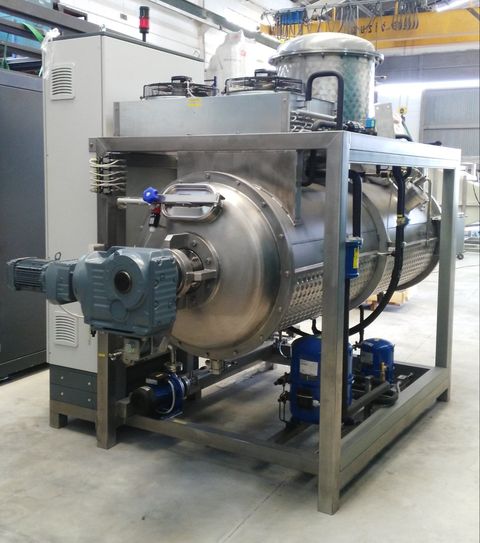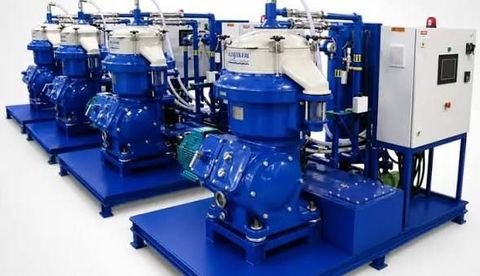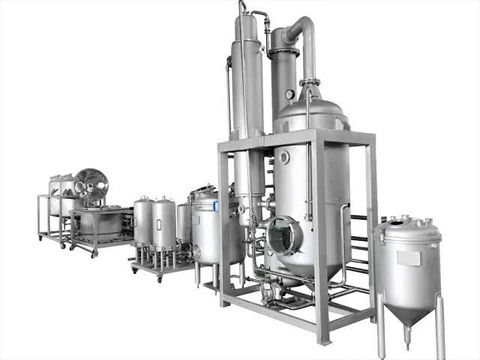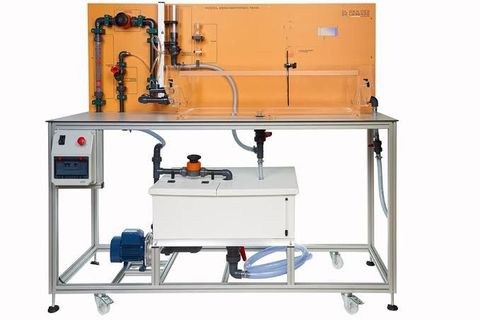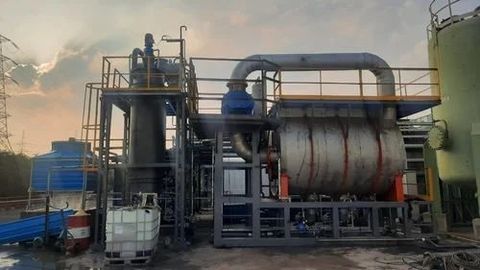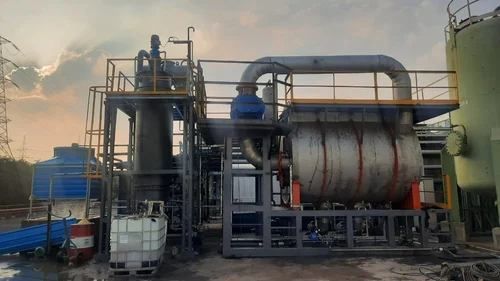
Industrial evaporation equipment is used to remove water or other volatile liquids from a solution by applying controlled heat.
The process increases the concentration of the remaining material and is widely used in food processing, chemicals, pharmaceuticals, wastewater treatment, dairy production, and other industrial applications.
The basic idea behind evaporation has existed for centuries, but modern industrial systems use controlled temperatures, pressure, circulation, and heat transfer to process materials more consistently. Different equipment designs are selected according to the liquid characteristics, required concentration, available energy, and processing conditions.
How Industrial Evaporation Works
An industrial evaporator generally transfers heat into a liquid until part of the liquid changes into vapor. The vapor is separated from the concentrated product, while the remaining liquid continues through the process or is collected.
Some systems operate under vacuum conditions. Lower pressure can reduce the boiling temperature, which can help process heat-sensitive materials while also changing the energy requirements of the system.
Common equipment configurations include:
- Falling-film evaporators for continuous processing of relatively thin liquids
- Rising-film evaporators for applications where natural circulation is useful
- Forced-circulation evaporators for liquids that may have higher viscosity or a greater tendency to form deposits
- Multiple-effect evaporators that reuse vapor energy across several stages
- Mechanical vapor recompression systems that recycle vapor energy within the process
Importance
Industrial evaporation equipment matters because removing moisture can reduce product volume, increase concentration, and prepare materials for later processing. The technology also plays a role in controlling processing conditions where temperature and concentration affect product characteristics.
Energy use is an important consideration because evaporation requires substantial heat. Equipment design can therefore influence how effectively available thermal energy is transferred and reused.
Factors That Affect Equipment Selection
Selecting an evaporation system depends on several process conditions rather than one universal configuration. Important factors include liquid viscosity, boiling point, solids content, heat sensitivity, scaling tendency, desired concentration, and required throughput.
| Factor | Why It Matters |
|---|---|
| Liquid viscosity | Influences circulation and heat transfer |
| Temperature sensitivity | Helps determine suitable operating temperatures |
| Solids concentration | Affects flow behavior during evaporation |
| Scaling tendency | Influences cleaning and equipment design |
| Energy availability | Affects heating and vapor-recovery methods |
| Required concentration | Determines evaporation stages and operating conditions |
Modern systems may also incorporate sensors and automated controls. Temperature, pressure, flow, concentration, and vapor conditions can be monitored to maintain stable operation and identify changes during processing.
Where Evaporation Equipment Is Used
The technology appears across many industries. Food processors may use evaporators to concentrate juices, dairy ingredients, sauces, or other liquid products. Chemical manufacturers can use them to concentrate solutions, recover materials, or prepare liquids for additional processing.
Wastewater applications can use evaporation to reduce liquid volume or separate water from dissolved materials under controlled conditions. The specific equipment configuration depends on the composition of the liquid and the required treatment process.
Tools and Resources
Understanding an evaporation system often requires more than identifying the equipment type. Process engineers and operators may use heat-transfer calculations, mass-balance calculations, concentration measurements, temperature sensors, pressure gauges, and flow meters to evaluate operating conditions.
Useful Technical Resources
Common resources include process-design calculators, heat-transfer references, equipment manuals, engineering spreadsheets, and industrial process simulation platforms. These resources can help users examine relationships among feed rate, evaporation rate, temperature, pressure, concentration, and energy requirements.
For educational research, manufacturer technical documentation, engineering handbooks, university publications, and industrial standards can provide background information about evaporation principles and equipment configurations.
A basic process review can consider:
- Feed composition and initial concentration
- Required final concentration
- Operating temperature and pressure
- Heating-medium conditions
- Vapor generation and recovery
- Cleaning requirements
- Material compatibility
These factors provide a practical framework for understanding how industrial evaporation equipment fits into a larger processing system.
FAQs
What is industrial evaporation equipment?
Industrial evaporation equipment removes part of a liquid through controlled heating and vapor separation. It is used to concentrate solutions or reduce liquid volume in various industrial processes.
How does industrial evaporation equipment improve processing efficiency?
Industrial evaporation equipment can improve process efficiency through controlled heat transfer, vapor reuse, multiple-effect operation, or mechanical vapor recompression. The appropriate method depends on the material and operating conditions.
What are multiple-effect evaporators?
Multiple-effect evaporators use several evaporation stages arranged so that vapor from one stage can provide heat for another stage. This approach can reduce the amount of external heating energy required under suitable operating conditions.
What factors influence evaporator selection?
Liquid properties, viscosity, solids content, temperature sensitivity, scaling behavior, required concentration, throughput, and available heating conditions all influence equipment selection.
Where is industrial evaporation equipment commonly used?
It is commonly used in food and beverage processing, dairy production, chemical processing, wastewater treatment, and other industries that need controlled liquid concentration or volume reduction.
Conclusion
Industrial evaporation equipment provides a controlled method for removing liquid from solutions and concentrating remaining materials. Equipment types vary according to liquid properties, temperature requirements, concentration targets, and energy considerations. Modern systems can combine heat recovery, sensors, and automated controls to manage processing conditions. Understanding these factors helps explain how evaporation fits into different industrial production and treatment processes.