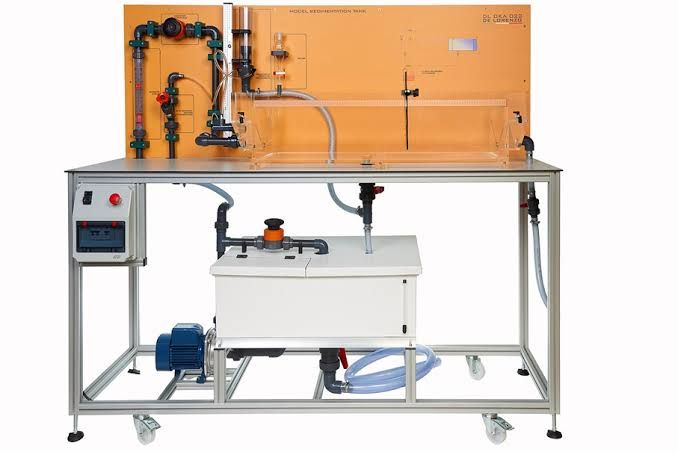
Industrial sedimentation equipment is designed to separate suspended solid particles from liquids by using gravity or controlled settling forces.
These systems are widely used in wastewater treatment, chemical processing, food production, mineral processing, and industrial water treatment.
Sedimentation systems can be configured as settling tanks, clarifiers, thickeners, lamella settlers, and other specialized separation units. The appropriate design depends on particle characteristics, liquid properties, flow rate, solids concentration, required clarification, and available installation space.
What Is Industrial Sedimentation Equipment?
Industrial sedimentation equipment separates suspended particles from a liquid by allowing particles with greater effective density to settle under gravity or enhanced settling conditions.
The process can be used for:
- Solid-liquid separation
- Water clarification
- Sludge thickening
- Suspended-solids removal
- Process-liquid clarification
- Wastewater treatment
- Mineral slurry separation
Sedimentation is often used as a preliminary or intermediate stage before filtration, biological treatment, membrane separation, or other downstream processes.
How Does Industrial Sedimentation Work?
The basic sedimentation process consists of several stages.
1. Feed Introduction
The process liquid containing suspended particles enters the sedimentation unit.
2. Flow Distribution
An inlet structure distributes the incoming stream across the settling zone.
3. Particle Settling
As flow velocity decreases, particles begin moving downward under gravitational force.
4. Clarified Liquid Collection
The clarified liquid moves toward the upper collection area and exits through an outlet system.
5. Solids Collection
Settled particles accumulate at the bottom of the tank or clarifier.
6. Sludge Removal
Scrapers, pumps, suction systems, or other mechanisms remove the accumulated solids.
Types of Industrial Sedimentation Equipment
Different sedimentation technologies are used according to process requirements.
Conventional Sedimentation Tanks
Conventional settling tanks provide a large volume in which suspended particles can settle naturally.
They can be designed as:
- Circular tanks
- Rectangular tanks
- Square tanks
These systems are widely used for industrial water and wastewater treatment.
Industrial Clarifiers
Clarifiers are designed to produce clarified liquid while collecting settled solids.
They may incorporate mechanical sludge scrapers, collection mechanisms, and controlled inlet and outlet structures.
Common applications include:
- Process-water treatment
- Wastewater treatment
- Chemical processing
- Food processing
Sludge Thickeners
Thickeners concentrate suspended solids into a denser sludge stream.
They are commonly used where reducing sludge volume is important before downstream dewatering or processing.
Lamella Settlers
Lamella settlers use inclined plates or tubes to increase the effective settling area within a compact footprint.
Particles settle onto the inclined surfaces and slide downward into a solids-collection zone.
Tube Settlers
Tube settlers use multiple inclined tubes to improve particle-settling conditions.
They can provide a relatively compact sedimentation arrangement for suitable applications.
High-Rate Settlers
High-rate sedimentation systems are designed to achieve greater solids separation within a smaller footprint than conventional settling arrangements.
They can incorporate inclined plates, tubes, or other enhanced-settling configurations.
Key Components of Industrial Sedimentation Equipment
| Component | Primary Function |
|---|---|
| Settling Tank | Provides separation volume |
| Inlet Structure | Distributes incoming flow |
| Baffles | Control hydraulic flow |
| Settling Zone | Provides particle-settling area |
| Sludge Hopper | Collects settled solids |
| Scraper Mechanism | Moves accumulated sludge |
| Sludge Pump | Removes concentrated solids |
| Weir | Controls clarified-liquid collection |
| Effluent Launder | Collects treated liquid |
| Drive Unit | Operates mechanical components |
| Control System | Manages automated operation |
The configuration depends on the type and capacity of the sedimentation system.
Important Sedimentation Principles
Sedimentation performance is influenced by the behavior of suspended particles within the liquid.
Particle Density
Particles with greater density relative to the surrounding liquid generally have a greater tendency to settle.
Particle Size
Larger particles often settle more rapidly than very fine particles.
Liquid Viscosity
Higher liquid viscosity can reduce settling velocity.
Hydraulic Loading
The flow entering the sedimentation system affects hydraulic conditions and available settling time.
Solids Concentration
High concentrations can cause particles to interact with each other, resulting in hindered or zone settling.
Types of Particle Settling
Discrete Settling
Particles settle independently without significant interaction with other particles.
This behavior can occur with relatively dilute suspensions.
Flocculent Settling
Particles combine while settling, changing their size and settling characteristics.
This is common when particles have a tendency to form flocs.
Hindered Settling
At higher solids concentrations, particles interfere with one another during settling.
Compression Settling
At very high solids concentrations, particles form a structure that compresses under its own weight.
Understanding settling behavior helps determine the appropriate equipment configuration.
Applications of Industrial Sedimentation Equipment
Sedimentation systems are used across many industries.
Wastewater Treatment
Industrial sedimentation equipment can separate suspended solids from wastewater before or after other treatment stages.
Applications can include:
- Primary clarification
- Secondary clarification
- Sludge thickening
- Industrial wastewater treatment
- Process-water recovery
Chemical Processing
Sedimentation can separate solids generated during chemical reactions or precipitation processes.
Applications may include:
- Precipitate separation
- Chemical slurry clarification
- Process-water clarification
- Solid recovery
Food and Beverage Processing
Sedimentation systems can support the separation of suspended solids from suitable food-processing streams.
Applications may include:
- Ingredient clarification
- Process-water treatment
- Beverage processing
- Wastewater treatment
Equipment design should consider appropriate hygiene and material requirements.
Mineral Processing
Sedimentation equipment is widely used for mineral slurries.
Applications can include:
- Tailings thickening
- Mineral slurry clarification
- Water recovery
- Solid concentration
Pulp and Paper Processing
Sedimentation systems can separate suspended fibers and other solids from process streams and wastewater.
Industrial Water Treatment
Sedimentation can serve as a pretreatment stage before filtration or membrane processes.
Removing larger suspended particles upstream can help reduce the solids load on downstream equipment.
Sedimentation Tank Design Factors
Several factors should be considered when designing a sedimentation system.
Flow Rate
The tank must accommodate the expected process flow while maintaining appropriate hydraulic conditions.
Surface Loading Rate
Surface loading relates the flow rate to the effective settling surface area.
It is an important parameter in clarifier and settling-tank design.
Retention Time
Hydraulic retention time represents the average time liquid remains within the system.
Adequate retention supports particle settling, although actual performance also depends on tank hydraulics and particle behavior.
Tank Depth
Tank depth influences sludge storage, hydraulic behavior, and overall equipment configuration.
Sludge Loading
The expected solids concentration and sludge production determine the required sludge-collection and removal arrangements.
Automation in Sedimentation Systems
Modern sedimentation equipment can incorporate automated controls to improve process consistency.
Automation may manage:
- Sludge scraper operation
- Sludge pump operation
- Flow control
- Sludge level
- Torque
- Tank level
- Chemical dosing
- Alarm conditions
PLC-Based Control
Programmable logic controllers can coordinate clarifier drives, pumps, valves, sensors, and other treatment equipment.
Sensor Monitoring
Sensors can monitor:
- Turbidity
- Liquid level
- Sludge blanket level
- Flow rate
- Torque
- Pressure
- pH
Real-time measurements can help operators identify changes in sedimentation performance.
Sedimentation and Clarification
Sedimentation and clarification are closely related but can have different process objectives.
A clarification system primarily focuses on producing a relatively clear liquid stream. A thickening system, in contrast, focuses more heavily on concentrating the solids into a denser underflow.
| Process Objective | Typical Equipment |
|---|---|
| Liquid Clarification | Clarifier |
| Sludge Concentration | Thickener |
| Compact Settling | Lamella Settler |
| General Gravity Separation | Settling Tank |
| Fine Suspended-Solid Separation | Enhanced Settling System |
The correct equipment depends on whether the primary objective is liquid clarity, solids concentration, or both.
Common Sedimentation Problems
Poor Solids Settling
Poor settling can result from very fine particles, unfavorable particle density, excessive hydraulic loading, or unsuitable process conditions.
Sludge Carryover
Excessive flow, poor hydraulic distribution, sludge accumulation, or incorrect operating conditions can cause solids to leave with the clarified liquid.
Sludge Blanket Buildup
Insufficient sludge removal can increase the sludge blanket and reduce effective settling volume.
Short-Circuiting
Uneven flow distribution can cause part of the incoming stream to travel directly toward the outlet without adequate settling.
Scraper Problems
Mechanical scraper systems can experience excessive torque, wear, misalignment, or buildup of settled material.
Maintenance of Industrial Sedimentation Equipment
Routine maintenance helps maintain reliable operation.
Typical activities include:
- Inspecting tank structures
- Checking scraper mechanisms
- Inspecting drive units
- Monitoring torque
- Checking sludge pumps
- Cleaning weirs and launders
- Inspecting inlet structures
- Checking sensors
- Removing accumulated deposits
- Testing control systems
Maintenance intervals should be based on equipment specifications, operating conditions, solids loading, and process requirements.
How to Select Industrial Sedimentation Equipment
Selection should be based on the characteristics of the process stream and the desired separation objective.
Consider:
- Flow rate
- Particle size
- Particle density
- Solids concentration
- Liquid viscosity
- Settling characteristics
- Required clarification level
- Sludge production
- Tank footprint
- Operating temperature
- Chemical compatibility
- Sludge removal method
- Automation requirements
- Maintenance requirements
For difficult separation processes, laboratory or pilot testing can help establish settling behavior and equipment requirements.
How to Evaluate Sedimentation Equipment Manufacturers
When evaluating industrial sedimentation equipment manufacturers, consider their engineering capabilities and equipment configurations.
Important factors include:
- Sedimentation technology
- Tank configuration
- Clarifier design
- Thickener technology
- Sludge-removal systems
- Mechanical drive design
- Material selection
- Instrumentation
- Automation
- Hydraulic design
- Testing procedures
- Technical documentation
- Maintenance requirements
A suitable manufacturer should be able to match the sedimentation technology with the process flow, particle characteristics, solids loading, and required separation performance.
Conventional vs Lamella Sedimentation
| Factor | Conventional Settler | Lamella Settler |
|---|---|---|
| Settling Area | Large tank area | Expanded effective area |
| Footprint | Generally larger | Generally more compact |
| Configuration | Open settling zone | Inclined plates or tubes |
| Solids Collection | Bottom collection | Plate/tube discharge to solids zone |
| Application | General settling | Compact clarification |
| Maintenance | Depends on design | Plate/tube cleaning may be required |
Actual performance depends on feed characteristics, hydraulic design, loading conditions, and equipment configuration.
Frequently Asked Questions
What is industrial sedimentation equipment?
Industrial sedimentation equipment separates suspended solids from liquids using gravity or enhanced settling principles. Common systems include settling tanks, clarifiers, thickeners, and lamella settlers.
Where is industrial sedimentation equipment used?
It is used in wastewater treatment, industrial water treatment, chemical processing, food and beverage processing, mineral processing, pulp and paper production, and other industries.
What is the difference between a clarifier and a thickener?
A clarifier primarily focuses on producing a clarified liquid stream, while a thickener is designed to concentrate suspended solids into a denser sludge stream.
What factors affect sedimentation performance?
Particle size, particle density, solids concentration, liquid viscosity, flow rate, surface loading, hydraulic conditions, retention time, and settling behavior can all affect performance.
How do I select industrial sedimentation equipment?
Evaluate the process flow, particle characteristics, solids concentration, settling behavior, required liquid clarity, sludge concentration, available footprint, material compatibility, sludge-removal method, automation, and maintenance requirements.
Conclusion
Industrial sedimentation equipment provides an established method for separating suspended solids from liquids through gravity-based settling and enhanced settling technologies. Settling tanks, clarifiers, thickeners, lamella settlers, and tube settlers can address different industrial separation requirements.
Effective sedimentation depends on particle characteristics, hydraulic loading, surface area, tank geometry, solids concentration, liquid properties, and sludge-removal performance. Proper hydraulic distribution is also important for minimizing short-circuiting and solids carryover.
Modern systems can incorporate automated scraper drives, sludge pumps, level monitoring, turbidity measurement, torque monitoring, and PLC-based controls. Careful equipment selection and routine inspection can help maintain reliable sedimentation performance across industrial processes.