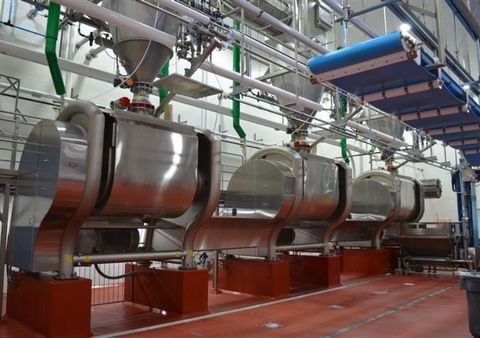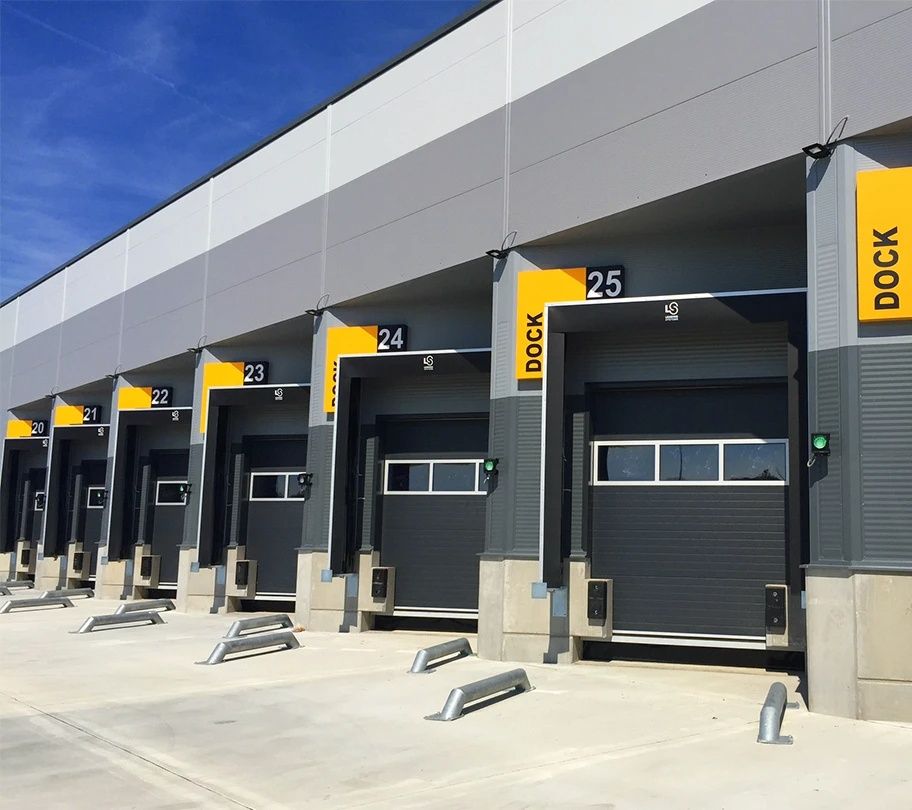
Industrial loading systems are engineered equipment and infrastructure used to move, transfer, position, and load materials between vehicles.
They are widely used in manufacturing plants, warehouses, logistics facilities, ports, terminals, chemical plants, and bulk-material operations.
Modern systems can combine loading platforms, conveyors, pumps, hoses, telescopic equipment, weighing systems, sensors, and automated controls. The appropriate configuration depends on the material being handled, loading method, throughput, vehicle type, environmental conditions, and required safety controls.
What Are Industrial Loading Systems?
An industrial loading system is a coordinated arrangement of equipment designed to facilitate the controlled transfer of materials during loading and unloading operations.
Depending on the application, the system may handle:
- Bulk solids
- Powders
- Granules
- Liquids
- Chemicals
- Fuel-related products
- Packaged goods
- Pallets
- Industrial components
- Containers
The system can range from a basic loading platform to a highly automated installation integrated with conveyors, pumps, sensors, and plant-control systems.
Types of Industrial Loading Systems
Different industries use different loading technologies according to material characteristics and operational requirements.
Truck Loading Systems
Truck loading systems are designed to transfer materials between industrial facilities and road vehicles. They can incorporate loading arms, flexible connections, pumps, conveyors, weighing systems, and control equipment.
Applications include bulk materials, liquids, chemicals, agricultural products, and manufactured goods.
Tanker Loading Systems
Tanker loading systems are used for controlled transfer of liquids or other compatible materials into tanker vehicles.
Typical components may include:
- Loading arms
- Pumps
- Flow meters
- Valves
- Grounding systems
- Emergency shutdown systems
- Level monitoring
- Control panels
The system design depends strongly on the characteristics of the transported material.
Bulk Loading Systems
Bulk loading systems transfer large quantities of powders, granules, aggregates, grains, minerals, or similar materials.
Conveyors, screw feeders, bucket elevators, telescopic chutes, and loading spouts can be integrated according to the material and required throughput.
Container Loading Systems
Container loading equipment helps transfer packaged goods, pallets, bulk materials, or specialized cargo into shipping containers.
Telescopic conveyors, flexible conveyors, lifting equipment, and positioning systems can improve access and material flow.
Automated Loading Systems
Automated loading systems use sensors, programmable controls, robotic equipment, conveyors, and positioning mechanisms to reduce manual intervention.
They can be integrated with warehouse management, production, and transportation workflows.
Components of Industrial Loading Systems
A loading installation can contain multiple mechanical and electronic components.
| Component | Primary Function |
|---|---|
| Loading Platform | Provides an operating area for loading activities |
| Conveyor | Transfers solid materials |
| Loading Arm | Transfers liquids or gases in suitable applications |
| Pump | Moves liquid materials |
| Loading Spout | Directs bulk materials into vehicles or containers |
| Valves | Controls material flow |
| Flow Meter | Measures material movement |
| Weighing System | Measures transferred material |
| Sensors | Monitor system conditions |
| Control Panel | Coordinates system operation |
| Emergency Shutdown | Stops equipment during unsafe conditions |
The exact configuration depends on the material, vehicle, process layout, and automation requirements.
How Industrial Loading Systems Work
Although designs vary, most systems follow a coordinated sequence.
1. Vehicle Positioning
The truck, tanker, railcar, or container is positioned at the designated loading area. Sensors or positioning guides can confirm alignment.
2. Connection
The loading equipment is connected to the vehicle or container. Depending on the application, this may involve a loading arm, hose, conveyor, chute, or telescopic system.
3. Safety Verification
Interlocks and sensors can verify conditions such as vehicle position, connection status, grounding, valve position, and emergency-system readiness.
4. Material Transfer
Material moves through the system using pumps, gravity, conveyors, screw mechanisms, or pneumatic conveying technology.
5. Measurement
Flow meters, load cells, weighing equipment, or other measurement technologies can monitor the transferred quantity.
6. Completion
Once the target quantity or process condition is reached, the system stops material flow. The connection is then safely disconnected and the vehicle can leave the loading area.
Applications of Industrial Loading Systems
Industrial loading equipment is used across many sectors.
Manufacturing
Factories use loading systems to move raw materials, finished products, components, and bulk substances between production areas and transport vehicles.
Chemical Processing
Chemical facilities may use specialized tanker and loading-arm systems for controlled transfer of compatible liquids and chemicals.
Material compatibility, containment, grounding, ventilation, and emergency shutdown provisions are important considerations.
Food and Beverage
Food-processing facilities can use loading systems for grains, powders, liquids, ingredients, packaged products, and finished goods.
Hygienic design and contamination control are important where equipment interfaces with food-processing operations.
Mining and Minerals
Bulk loading systems can transfer ores, minerals, aggregates, and other high-volume materials into trucks, railcars, or ships.
Equipment must be designed to handle abrasive materials and demanding environmental conditions.
Logistics and Warehousing
Loading dock equipment, conveyors, vehicle-positioning systems, and automated loading equipment can support the movement of packaged goods and pallets.
Agriculture
Agricultural facilities can use loading systems for grain, feed, fertilizer, seed, and other bulk materials.
Industrial Loading System Specifications
Several technical factors influence system design.
Loading Capacity
Loading capacity indicates the quantity of material the system can transfer within a specified period. It may be expressed as tonnes per hour, cubic meters per hour, liters per minute, or another suitable unit.
Vehicle Type
The loading system must accommodate the dimensions and connection requirements of the intended vehicle.
Potential vehicle types include:
- Trucks
- Tanker trucks
- Railcars
- Shipping containers
- Ships
- Specialized transport vehicles
Material Characteristics
Material density, particle size, viscosity, temperature, moisture, abrasiveness, and chemical properties can affect equipment selection.
Loading Speed
Loading speed must balance productivity with material behavior, equipment limitations, dust control, and safety requirements.
Measurement Accuracy
Where material quantities must be documented, accurate flow meters, load cells, weighing systems, or other measurement equipment may be incorporated.
Automation in Industrial Loading Systems
Automation can improve process consistency and reduce manual handling.
Automated loading systems can incorporate:
- PLC controllers
- Industrial sensors
- Variable-frequency drives
- Automated valves
- Robotic positioning
- Flow meters
- Load cells
- Vehicle detection
- Barcode or identification systems
- Remote monitoring
A PLC can coordinate the sequence of vehicle positioning, equipment connection, material transfer, measurement, and shutdown.
Smart Monitoring
Connected sensors can collect information about:
- Flow rate
- Loading quantity
- Equipment status
- Motor temperature
- Pressure
- Valve position
- Operating cycles
- Alarm conditions
This information can support maintenance planning and operational monitoring.
Safety Features
Industrial loading areas can involve moving machinery, pressurized materials, heavy vehicles, and potentially hazardous substances. Safety engineering is therefore an important part of system design.
Common safety features include:
- Emergency stop systems
- Vehicle-position sensors
- Safety interlocks
- Grounding verification
- Overfill protection
- Pressure monitoring
- Flow-control systems
- Guarding
- Spill containment
- Access controls
- Alarm systems
For hazardous materials, equipment should be designed according to applicable regulations, facility requirements, and hazardous-area classifications.
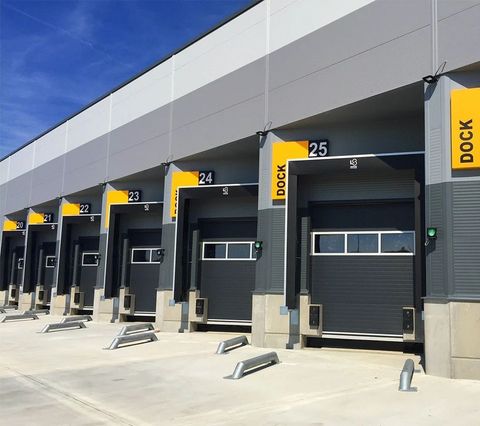
Loading Dock Systems
Loading dock systems are commonly used for packaged goods and palletized materials.
They can include:
- Dock levelers
- Dock shelters
- Vehicle restraints
- Dock lights
- Dock bumpers
- Loading ramps
- Conveyor systems
- Safety barriers
A properly coordinated dock layout can reduce unnecessary movement between vehicles and warehouse areas.
Bulk Material Loading Systems
Bulk loading requires careful consideration of material flow and dust management.
Common equipment includes:
- Telescopic loading spouts
- Screw conveyors
- Belt conveyors
- Bucket elevators
- Pneumatic conveying systems
- Rotary feeders
- Flexible loading chutes
Dust extraction and containment systems may be integrated where fine particles could become airborne during transfer.
Quality Control and System Testing
Before commissioning, industrial loading systems can undergo mechanical, electrical, and functional testing.
Mechanical Testing
Mechanical components can be inspected for:
- Alignment
- Structural integrity
- Movement
- Connection accuracy
- Wear surfaces
Electrical Testing
Electrical systems may be tested for:
- Sensor operation
- Motor controls
- Emergency stops
- Interlocks
- PLC functions
- Communication systems
Flow Testing
Material transfer systems can be tested under controlled operating conditions to verify flow rate, measurement accuracy, pressure, and system response.
Maintenance of Industrial Loading Systems
Regular maintenance helps maintain reliable loading operations.
Important activities include:
- Inspecting conveyors
- Checking loading arms
- Inspecting hoses
- Testing emergency stops
- Checking valves
- Inspecting pumps
- Cleaning sensors
- Checking electrical connections
- Inspecting structural components
- Calibrating measurement systems
- Checking safety interlocks
Maintenance intervals should be established according to equipment specifications, operating frequency, material characteristics, and environmental conditions.
Factors to Consider When Selecting Industrial Loading Systems
A suitable system should be designed around the complete loading operation.
Consider:
- Material type
- Material properties
- Required throughput
- Vehicle configuration
- Loading location
- Available space
- Loading height
- Measurement requirements
- Automation level
- Environmental conditions
- Safety requirements
- Maintenance requirements
- Future capacity requirements
For high-volume facilities, integration with plant control systems and transportation workflows can be particularly important.
Industrial Loading Systems vs Manual Loading
| Factor | Industrial Loading Systems | Manual Loading |
|---|---|---|
| Material Handling | Mechanized or automated | Primarily manual |
| Throughput | Suitable for higher volumes | Generally more dependent on labor |
| Measurement | Can integrate automated measurement | May require separate measurement |
| Process Control | Sensors and PLCs can be integrated | More operator-dependent |
| Safety Controls | Interlocks and automated shutdowns available | Depends heavily on procedures |
| Repeatability | High when properly configured | Can vary between operations |
The appropriate approach depends on material volume, process requirements, facility layout, and operational conditions.
How to Evaluate Industrial Loading System Manufacturers
When evaluating manufacturers, review both engineering capabilities and system integration experience.
Important factors include:
- Loading technology expertise
- Equipment design capabilities
- Material-handling experience
- Automation capabilities
- Control-system integration
- Safety-system design
- Fabrication capabilities
- Testing procedures
- Documentation
- Maintenance planning
- Custom system engineering
A manufacturer should be able to demonstrate how the proposed configuration addresses the material characteristics, throughput, vehicle type, safety requirements, and site layout.
Frequently Asked Questions
What are industrial loading systems used for?
Industrial loading systems are used to transfer materials between production facilities, storage systems, transport vehicles, containers, and other industrial locations.
What materials can industrial loading systems handle?
Depending on the equipment, systems can handle liquids, powders, granules, aggregates, grains, packaged products, pallets, chemicals, and various industrial materials.
What is an automated loading system?
An automated loading system uses sensors, controllers, actuators, conveyors, pumps, valves, or robotic equipment to coordinate loading operations with reduced manual intervention.
What factors determine loading system capacity?
Capacity depends on the material, equipment configuration, transfer mechanism, required loading speed, vehicle type, process layout, and operating conditions.
Why are safety interlocks important in loading systems?
Interlocks can prevent equipment from operating when required conditions are not satisfied. They can help coordinate vehicle positioning, connections, valves, grounding, and emergency shutdown functions.
Conclusion
Industrial loading systems provide controlled methods for transferring materials between production facilities, storage areas, transport vehicles, and processing operations. Their configurations range from loading docks and conveyors to tanker loading arms, bulk loading spouts, pumps, and highly automated systems.
Effective system design requires consideration of material characteristics, throughput, vehicle configuration, measurement requirements, facility layout, automation, and safety. Integration of sensors, PLC controls, automated valves, flow measurement, and monitoring technologies can improve process consistency and operational visibility.
As industrial facilities continue to adopt automated material-handling processes, loading systems are becoming increasingly integrated with warehouse, production, transportation, and plant-control infrastructure.