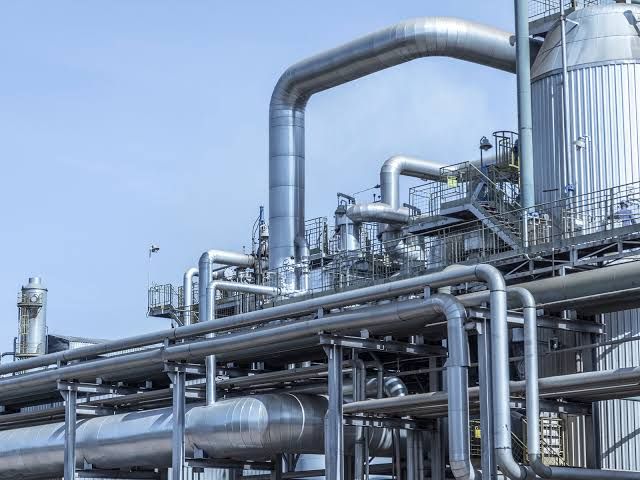
Industrial crystallizers are process systems designed to produce solid crystals from liquids or solutions under controlled conditions.
They are widely used in chemical manufacturing, pharmaceuticals, food processing, fertilizers, mineral processing, and specialty materials production.
Crystallization can be used to separate, purify, concentrate, or recover valuable materials. The appropriate crystallizer depends on solubility characteristics, solution concentration, temperature, evaporation requirements, crystal size, throughput, and the desired product quality.
What Are Industrial Crystallizers?
An industrial crystallizer is a process vessel or system that converts dissolved material into solid crystals by creating conditions where the solution becomes supersaturated.
Supersaturation can be generated through:
- Cooling
- Evaporation
- Vacuum operation
- Antisolvent addition
- Reaction
- Combination processes
The resulting crystals can then be separated from the remaining liquid using equipment such as centrifuges, filters, or other solid-liquid separation systems.
How Do Industrial Crystallizers Work?
Although designs vary, industrial crystallization generally follows several stages.
1. Feed Preparation
A solution containing the material to be crystallized enters the system.
2. Supersaturation Generation
The solution is brought into a supersaturated state through controlled cooling, evaporation, vacuum, or another suitable method.
3. Nucleation
Small crystal nuclei begin to form when the supersaturation reaches the appropriate level.
4. Crystal Growth
Dissolved molecules or ions move from the liquid phase onto existing crystal surfaces.
5. Crystal Suspension
Agitation or circulation keeps crystals distributed throughout the process vessel.
6. Crystal Separation
The crystal-containing slurry is transferred to a separation system.
7. Product Recovery
Separated crystals may be washed, dried, screened, and transferred for additional processing.
Types of Industrial Crystallizers
Different crystallizer configurations are designed for specific process conditions.
Cooling Crystallizers
Cooling crystallizers reduce the temperature of a solution to decrease solubility and promote crystal formation.
They are suitable for materials whose solubility changes significantly with temperature.
Evaporative Crystallizers
Evaporative crystallizers remove solvent through controlled evaporation.
As solvent is removed, the dissolved material concentration increases until crystallization occurs.
They are commonly used for salts, chemicals, and concentrated process streams.
Vacuum Crystallizers
Vacuum crystallizers operate at reduced pressure.
Lower pressure can reduce the boiling temperature, allowing evaporation and crystallization at relatively lower temperatures.
This can be useful for heat-sensitive materials and solutions requiring controlled thermal conditions.
Forced Circulation Crystallizers
Forced circulation systems use pumps to circulate the process slurry through a heat exchanger and back into the crystallization vessel.
They are suitable for applications involving high solids concentrations, scaling, or difficult circulation conditions.
Draft Tube Baffle Crystallizers
Draft tube baffle systems use internal circulation structures to control crystal movement and improve circulation.
They can support controlled crystal growth and slurry management.
Continuous Crystallizers
Continuous crystallizers continuously receive feed and discharge crystal slurry.
They can be integrated into high-throughput production processes where steady operation is appropriate.
Batch Crystallizers
Batch crystallizers process a defined quantity of solution during each cycle.
They provide flexibility for different formulations and production requirements.
Key Components of Industrial Crystallizers
| Component | Main Function |
|---|---|
| Crystallizer Vessel | Contains the crystallization process |
| Agitator | Maintains crystal suspension |
| Heat Exchanger | Controls process temperature |
| Circulation Pump | Moves slurry through the system |
| Vacuum System | Reduces operating pressure |
| Feed System | Introduces solution |
| Vapor Outlet | Removes generated vapor |
| Baffles | Improve circulation |
| Sensors | Monitor process conditions |
| Control System | Regulates operating parameters |
The actual configuration depends on the crystallization method and process requirements.
Crystallization Methods
Cooling Crystallization
Cooling lowers solubility and creates supersaturation.
The cooling rate should be controlled because rapid cooling can generate excessive nucleation and very small crystals.
Evaporative Crystallization
Solvent is removed through evaporation, increasing the concentration of dissolved material.
Once the solution reaches the required supersaturation level, crystals begin to form and grow.
Vacuum Crystallization
Vacuum reduces the boiling temperature of the solution.
Evaporation under reduced pressure can create supersaturation while maintaining a lower process temperature.
Antisolvent Crystallization
An antisolvent is introduced to reduce the solubility of the target compound.
This technique is used in selected pharmaceutical, chemical, and specialty-material processes.
Nucleation and Crystal Growth
Two fundamental stages determine the final crystal population.
Nucleation
Nucleation is the formation of new crystal particles.
It can occur spontaneously or around existing particles and surfaces.
Crystal Growth
Once nuclei are present, dissolved material deposits onto their surfaces.
The balance between nucleation and growth influences:
- Crystal size
- Crystal-size distribution
- Shape
- Purity
- Filtration behavior
- Product handling
Controlled supersaturation is therefore important for consistent crystal production.
Crystal Size Control
Crystal size is an important product-quality parameter.
It can be influenced by:
- Cooling rate
- Supersaturation
- Agitation
- Residence time
- Seed crystals
- Temperature profile
- Feed concentration
- Circulation rate
Seeded Crystallization
Seed crystals can be introduced to provide controlled surfaces for crystal growth.
This can help reduce uncontrolled nucleation and improve crystal-size consistency in suitable processes.
Applications of Industrial Crystallizers
Industrial crystallizers are used across numerous industries.
Chemical Manufacturing
Crystallizers can produce or recover:
- Inorganic salts
- Specialty chemicals
- Organic compounds
- Chemical intermediates
- Purified materials
Pharmaceutical Manufacturing
Crystallization is commonly used in pharmaceutical processing for purification and isolation of suitable active ingredients and intermediates.
Crystal form, purity, particle size, and process conditions can influence downstream processing.
Food Processing
Crystallization can be used for:
- Sugar
- Salt
- Dairy ingredients
- Food additives
- Concentrated food products
Controlled crystal formation can influence texture and product characteristics.
Fertilizer Production
Crystallizers can support the production and recovery of selected fertilizer salts and nutrient compounds.
Mineral Processing
Crystallization systems can recover selected dissolved minerals and salts from process streams.
Wastewater Treatment
Specialized crystallization systems can recover dissolved compounds from concentrated wastewater streams.
Important Industrial Crystallizer Specifications
Processing Capacity
Capacity may be specified by:
- Kilograms per hour
- Tons per hour
- Cubic meters per hour
- Batch volume
The specification should identify whether it refers to feed, slurry, or recovered crystal production.
Operating Temperature
Temperature affects solubility, supersaturation, nucleation, crystal growth, and product stability.
Operating Pressure
Vacuum crystallizers require appropriate pressure ratings and vacuum-system capacity.
Circulation Rate
Circulation influences heat transfer, suspension, residence time, and crystal movement.
Crystal Production Rate
The expected crystal-production rate should be evaluated alongside feed concentration and recovery requirements.
Factors Affecting Crystallization Performance
Several variables influence crystallizer performance.
Important factors include:
- Solubility curve
- Feed concentration
- Supersaturation
- Temperature
- Cooling rate
- Evaporation rate
- Agitation
- Circulation
- Residence time
- Seed concentration
- Crystal size
- Impurity concentration
Understanding the material's solubility behavior is fundamental to crystallizer design.
Industrial Crystallizer Automation
Modern crystallization systems can incorporate automated controls for consistent process operation.
Automation may regulate:
- Temperature
- Pressure
- Feed flow
- Circulation rate
- Agitator speed
- Vacuum level
- Liquid level
- Evaporation rate
- Slurry density
PLC-Based Control
A programmable logic controller can coordinate pumps, valves, agitators, vacuum equipment, heat exchangers, and sensors.
Process Monitoring
Sensors can monitor:
- Temperature
- Pressure
- Level
- Flow
- Conductivity
- Density
- Concentration
Advanced monitoring can help identify changes in supersaturation and crystallization conditions.
Heat Transfer in Crystallizers
Heat transfer plays a major role in cooling and evaporative crystallization.
Heat-transfer systems may include:
- External heat exchangers
- Internal coils
- Cooling jackets
- Steam-heated surfaces
- Refrigeration systems
The design must account for scaling and fouling because crystal deposits can accumulate on heat-transfer surfaces.
Fouling and Scaling
Crystallization naturally involves solid formation, making deposit control an important design consideration.
Scaling can occur when crystals form on heat-transfer surfaces rather than remaining suspended in the process slurry.
Potential factors include:
- Excessive supersaturation
- Poor circulation
- Unsuitable temperature profiles
- High surface temperature
- Inadequate cleaning
Crystallizer design should encourage crystal growth in the intended slurry phase.
Solid-Liquid Separation
After crystallization, the resulting slurry usually requires separation.
Common technologies include:
- Centrifuges
- Vacuum filters
- Pressure filters
- Nutsche filters
- Settling systems
The crystal characteristics produced by the crystallizer can influence the performance of downstream separation equipment.
Common Industrial Crystallizer Problems
Excessive Fine Crystals
Rapid supersaturation generation can cause excessive nucleation and produce very small particles.
Poor Crystal Growth
Insufficient residence time, unsuitable supersaturation, or incorrect temperature control can limit crystal growth.
Scaling
Uncontrolled deposition on heat-transfer surfaces can reduce heat-transfer performance.
Inconsistent Crystal Size
Variation in feed composition, cooling rate, agitation, or residence time can produce inconsistent crystal-size distributions.
Slurry Handling Problems
High solids concentration can increase viscosity and create circulation or pumping challenges.
Maintenance of Industrial Crystallizers
Regular maintenance helps maintain process performance.
Typical activities include:
- Inspecting heat-transfer surfaces
- Removing scale deposits
- Checking circulation pumps
- Inspecting agitators
- Checking seals
- Testing temperature sensors
- Inspecting pressure instruments
- Checking vacuum systems
- Inspecting valves
- Cleaning process piping
- Testing control systems
Cleaning frequency should be determined by feed characteristics, scaling behavior, operating hours, and equipment documentation.
How to Select Industrial Crystallizers
Selection should begin with the material's solubility characteristics and desired crystal properties.
Consider:
- Feed composition
- Solubility behavior
- Desired crystal size
- Crystal-size distribution
- Required production rate
- Supersaturation method
- Operating temperature
- Operating pressure
- Viscosity
- Solids concentration
- Fouling tendency
- Residence time
- Heat-transfer requirements
- Cleaning requirements
- Automation
- Available installation space
Laboratory and pilot-scale testing can help establish appropriate crystallization conditions before full-scale equipment selection.
How to Evaluate Industrial Crystallizer Manufacturers
When evaluating industrial crystallizer manufacturers, consider their process engineering capabilities and equipment design.
Important factors include:
- Crystallizer technology
- Capacity range
- Material compatibility
- Heat-transfer design
- Circulation system
- Agitator configuration
- Vacuum capability
- Crystal-size control
- Automation
- Instrumentation
- Cleaning systems
- Safety systems
- Testing procedures
- Technical documentation
- Maintenance requirements
The manufacturer's ability to understand solubility behavior, supersaturation, nucleation, crystal growth, and downstream separation is particularly important.
Batch vs Continuous Crystallizers
| Factor | Batch Crystallizer | Continuous Crystallizer |
|---|---|---|
| Feed Method | Batch-based | Continuous |
| Product Discharge | Batch-based | Continuous |
| Process Flexibility | Generally high | Suited to stable processes |
| Residence Time | Batch-defined | Flow-dependent |
| Crystal Control | Flexible | Steady-state control |
| Automation | High potential | High potential |
The appropriate configuration depends on production requirements, material characteristics, crystal specifications, and process stability.
Frequently Asked Questions
What are industrial crystallizers used for?
Industrial crystallizers are used to produce, recover, concentrate, or purify solid crystals from liquid solutions in chemical, pharmaceutical, food, fertilizer, mineral, and wastewater processes.
What are the main types of industrial crystallizers?
Common types include cooling crystallizers, evaporative crystallizers, vacuum crystallizers, forced circulation crystallizers, draft tube baffle crystallizers, batch crystallizers, and continuous crystallizers.
What is supersaturation in crystallization?
Supersaturation occurs when a solution contains more dissolved material than it can normally maintain under equilibrium conditions. This provides the driving force for nucleation and crystal growth.
How is crystal size controlled?
Crystal size can be influenced through supersaturation control, cooling rate, agitation, residence time, seed crystals, feed concentration, and circulation conditions.
How do I select an industrial crystallizer?
Consider solubility characteristics, feed composition, desired crystal size, production rate, supersaturation method, temperature, pressure, solids concentration, fouling tendency, heat-transfer requirements, and downstream separation needs.
Conclusion
Industrial crystallizers provide controlled methods for producing and recovering solid crystals from liquid solutions. Cooling, evaporation, vacuum operation, antisolvent addition, and other techniques can generate the supersaturation needed for crystal formation.
Crystallizer performance depends on solubility behavior, supersaturation, temperature, residence time, circulation, agitation, seeding, and heat transfer. These parameters influence crystal size, purity, morphology, and downstream separation performance.
Modern industrial crystallization systems can incorporate PLC controls, automated temperature and pressure management, circulation control, vacuum systems, sensors, and process monitoring. Proper equipment selection, scaling management, and routine maintenance are important for consistent crystallization performance.