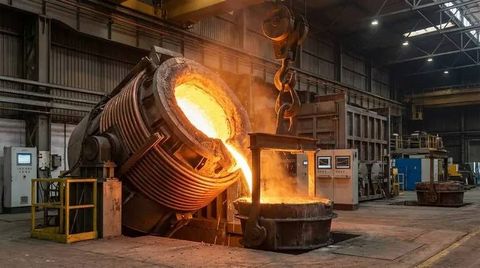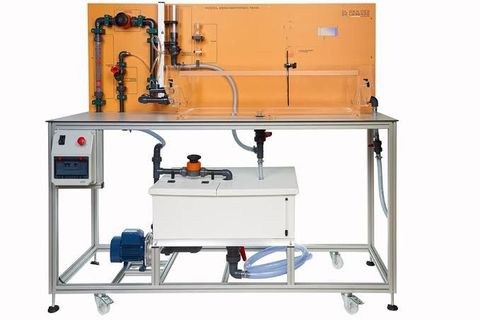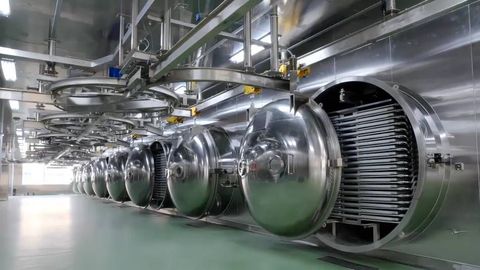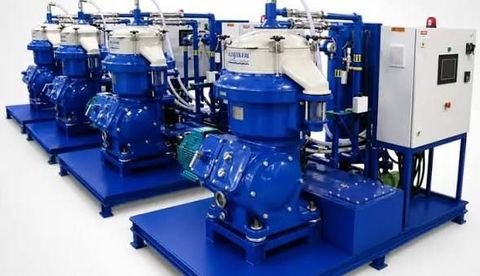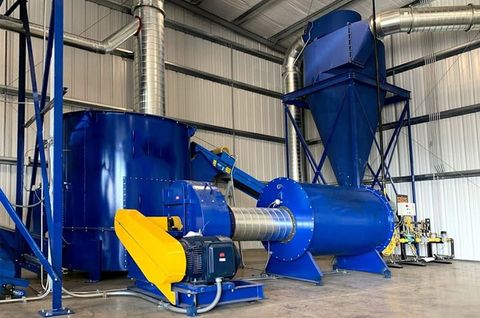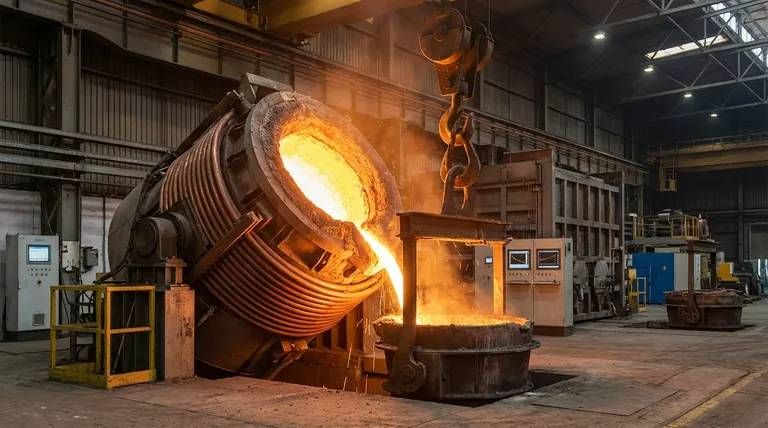
Industrial furnace manufacturing involves designing and producing thermal equipment used to heat, melt, cure, dry, harden, or process materials under controlled temperatures.
Furnaces are used across metal processing, ceramics, glass production, chemical processing, heat treatment, and several manufacturing environments where controlled heat is an important part of production.
Modern industrial furnaces have developed from basic combustion-based heating systems into equipment that can combine electronic controls, sensors, insulation materials, automated temperature regulation, and energy monitoring. The design selected for a facility depends on factors such as operating temperature, material type, heating method, chamber size, production cycle, and environmental requirements.
Common Industrial Furnace Types
Different manufacturing processes require different furnace configurations. Common categories include batch furnaces, continuous furnaces, heat treatment furnaces, electric furnaces, gas-fired furnaces, vacuum furnaces, and induction furnaces.
| Furnace Type | Typical Application | Main Heating Approach |
|---|---|---|
| Batch Furnace | Heat treatment and small batches | Electric or gas |
| Continuous Furnace | High-volume processing | Electric or gas |
| Induction Furnace | Metal melting and heating | Electromagnetic induction |
| Vacuum Furnace | Controlled-atmosphere treatment | Electric |
| Gas-Fired Furnace | High-temperature processing | Combustion |
| Electric Furnace | Controlled heating applications | Electrical resistance |
The manufacturing process generally begins with defining thermal requirements and chamber dimensions. Engineers then consider heating elements, burners, insulation, airflow, temperature sensors, control systems, structural materials, and safety mechanisms.
Importance
Industrial furnace manufacturing matters because thermal processing can influence the physical properties, appearance, strength, and consistency of many materials. A furnace that maintains an appropriate temperature profile can help create controlled processing conditions, while inadequate heat distribution may produce uneven results.
Energy use is another important consideration. Heating equipment can consume substantial amounts of electricity or fuel, particularly when operated for extended periods. Modern furnace designs therefore often include improved insulation, programmable controls, heat recovery concepts, and monitoring systems intended to manage thermal energy more effectively.
Modern Technologies in Furnace Manufacturing
Several technologies are changing how industrial furnaces are designed and operated. Digital temperature controllers can regulate heating cycles according to programmed parameters, while thermocouples and other sensors provide measurements from different areas of the furnace.
Programmable logic controllers can coordinate heating stages, cooling sequences, alarms, and equipment interlocks. Data logging can also help operators review temperature profiles and identify variations between production cycles.
Other developments include:
- Improved ceramic and fiber insulation for thermal containment
- Variable-frequency drives for selected motors and fans
- Automated burner management systems
- Digital temperature monitoring
- Programmable heating and cooling cycles
- Heat recovery systems for suitable applications
- Remote data access through industrial networks
- Predictive monitoring based on operating data
Factors to Review Before Upgrading
An upgrade should consider the existing furnace, production requirements, operating environment, and available utilities. Simply replacing an older unit with a newer design may not address problems caused by incorrect furnace sizing, poor airflow, unsuitable insulation, or inconsistent loading patterns.
Important factors include maximum operating temperature, heating uniformity, cycle duration, chamber dimensions, material characteristics, atmosphere requirements, electrical capacity, fuel availability, ventilation, and maintenance access.
A clear comparison between current operating conditions and proposed specifications can help identify which technological changes are relevant to the application.
Tools and Resources
Several digital and technical resources can support research into industrial furnace manufacturing. Temperature conversion calculators can help compare Celsius, Fahrenheit, and Kelvin measurements when reviewing equipment specifications from different regions.
Energy calculators can provide estimates for heating requirements when basic information such as material mass, temperature change, specific heat, and heating duration is available. These calculations are simplified and do not represent actual furnace efficiency because heat losses, insulation, loading patterns, and other factors also affect energy consumption.
Useful resources can include:
- Furnace temperature data sheets
- Industrial equipment specification templates
- Thermal calculation worksheets
- Energy monitoring dashboards
- Maintenance inspection checklists
- Process temperature logging systems
- Manufacturer technical documentation
- Industrial automation software
These resources can make it easier to organize technical requirements before comparing furnace configurations.
FAQs
What is industrial furnace manufacturing?
Industrial furnace manufacturing is the process of designing and producing thermal equipment for controlled heating, melting, drying, curing, or heat treatment applications. Designs vary according to temperature, material, atmosphere, capacity, and production method.
What technologies are used in modern industrial furnace manufacturing?
Modern industrial furnace manufacturing can incorporate digital temperature controllers, sensors, programmable logic controllers, automated burner systems, improved insulation, data logging, and industrial communication networks.
How does furnace insulation affect operation?
Insulation helps reduce heat transfer from the furnace chamber to the surrounding environment. Its composition, thickness, temperature rating, and condition can influence thermal stability and energy requirements.
What should be checked before upgrading an industrial furnace?
Key considerations include operating temperature, chamber size, material load, heating cycle, temperature uniformity, energy source, control requirements, ventilation, safety systems, and available electrical or fuel capacity.
Are industrial furnace manufacturing technologies suitable for every facility?
No single furnace configuration suits every application. Requirements differ according to materials, production volume, temperature range, atmosphere, heating method, and process conditions.
Conclusion
Industrial furnace manufacturing has evolved through improvements in heating technology, insulation, sensors, automation, and digital monitoring. Modern systems can provide more controlled thermal processes while allowing operating data to be recorded and reviewed. Before an upgrade, factors such as temperature requirements, chamber capacity, energy source, process cycles, and control systems should be examined together. Understanding these elements provides a clearer foundation for evaluating furnace technologies.